Urban Center
Urban Center
Urban Center

Urban Center A

Residential, Shopping & Employment; Bus Rapid Transit

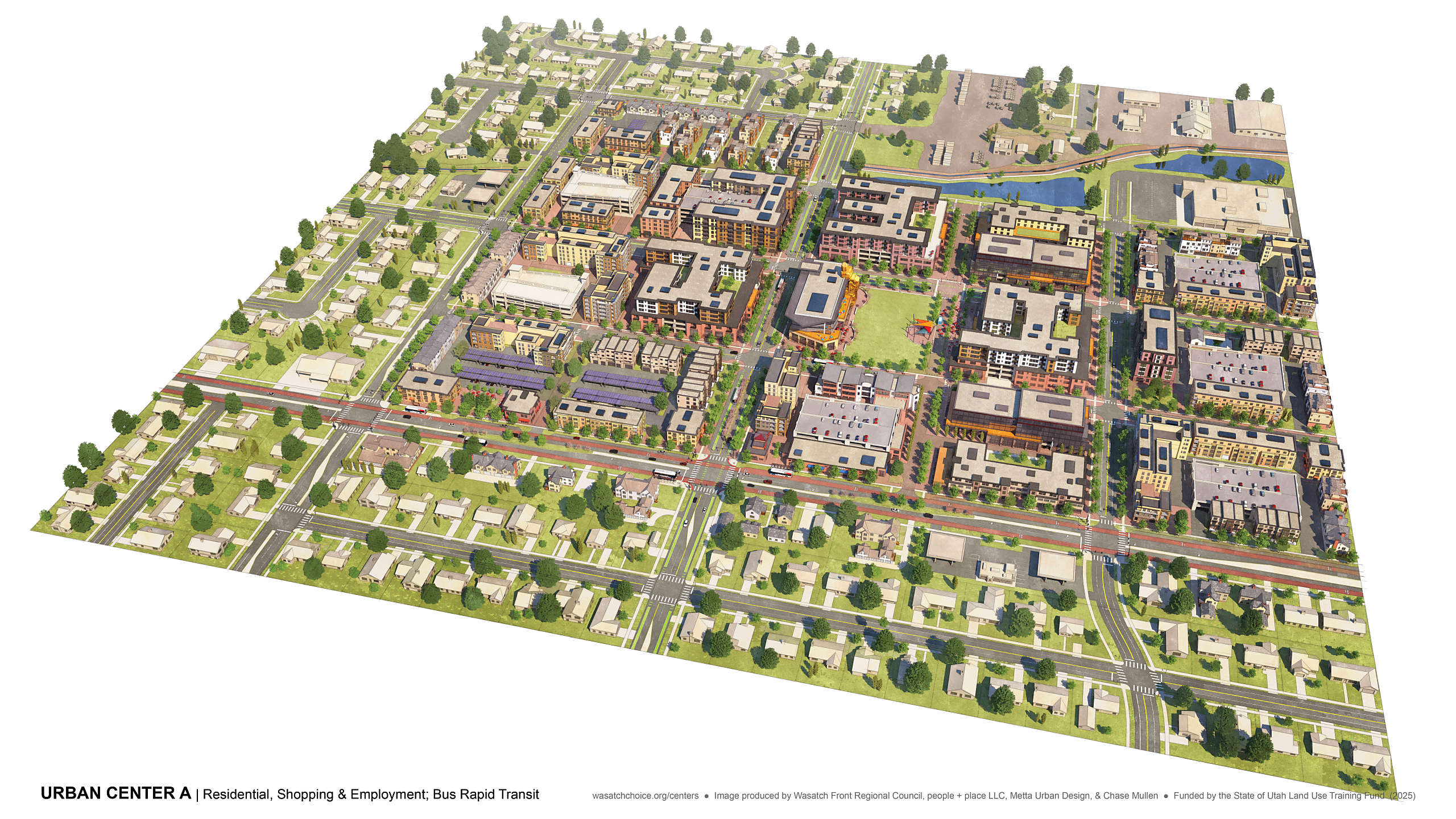
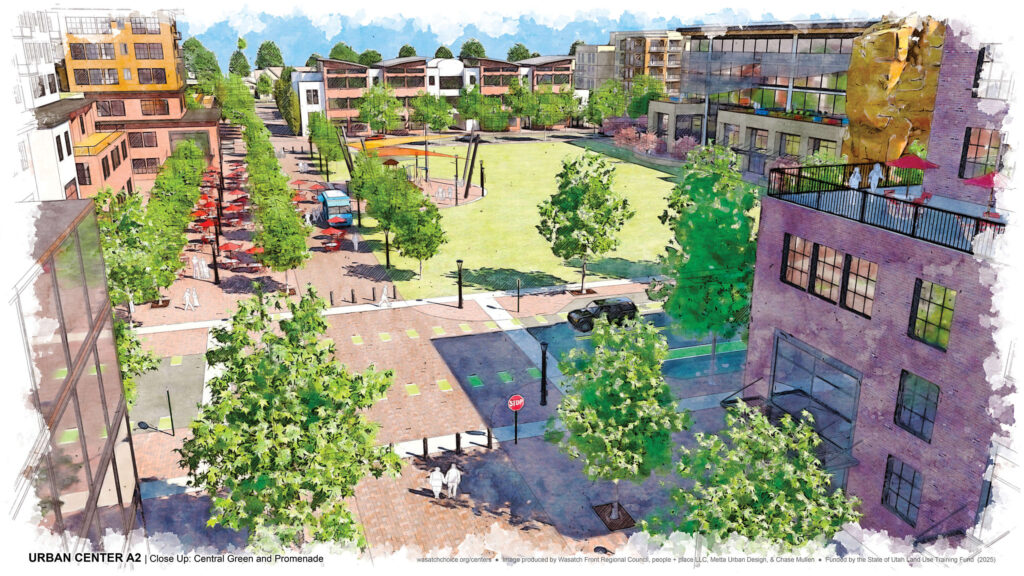
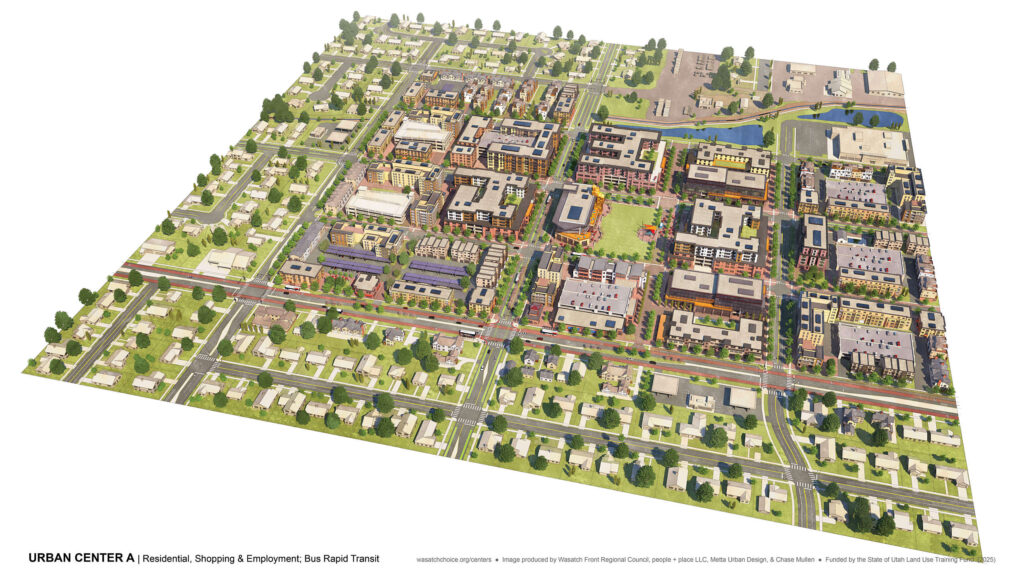
Imagine an urban center. It’s the heart of a larger city, rich with places to live and work but also with spaces to connect, learn, grow, and play. An urban center can support lots of amenities. Take a look at the outdoor concert and event area, the pedestrian walk and food truck alley, and the municipal building with a climbing wall and community center complete with indoor space and second floor outdoor space. Adjacent to this common area, apartment dwellers and office workers enjoy the view and walkable access to lots to do and enjoy.

2-6

Floors

20-65

DUs / AC

20-30

Jobs / AC

Block Pattern

Structured Parking

Bus Rapid Transit

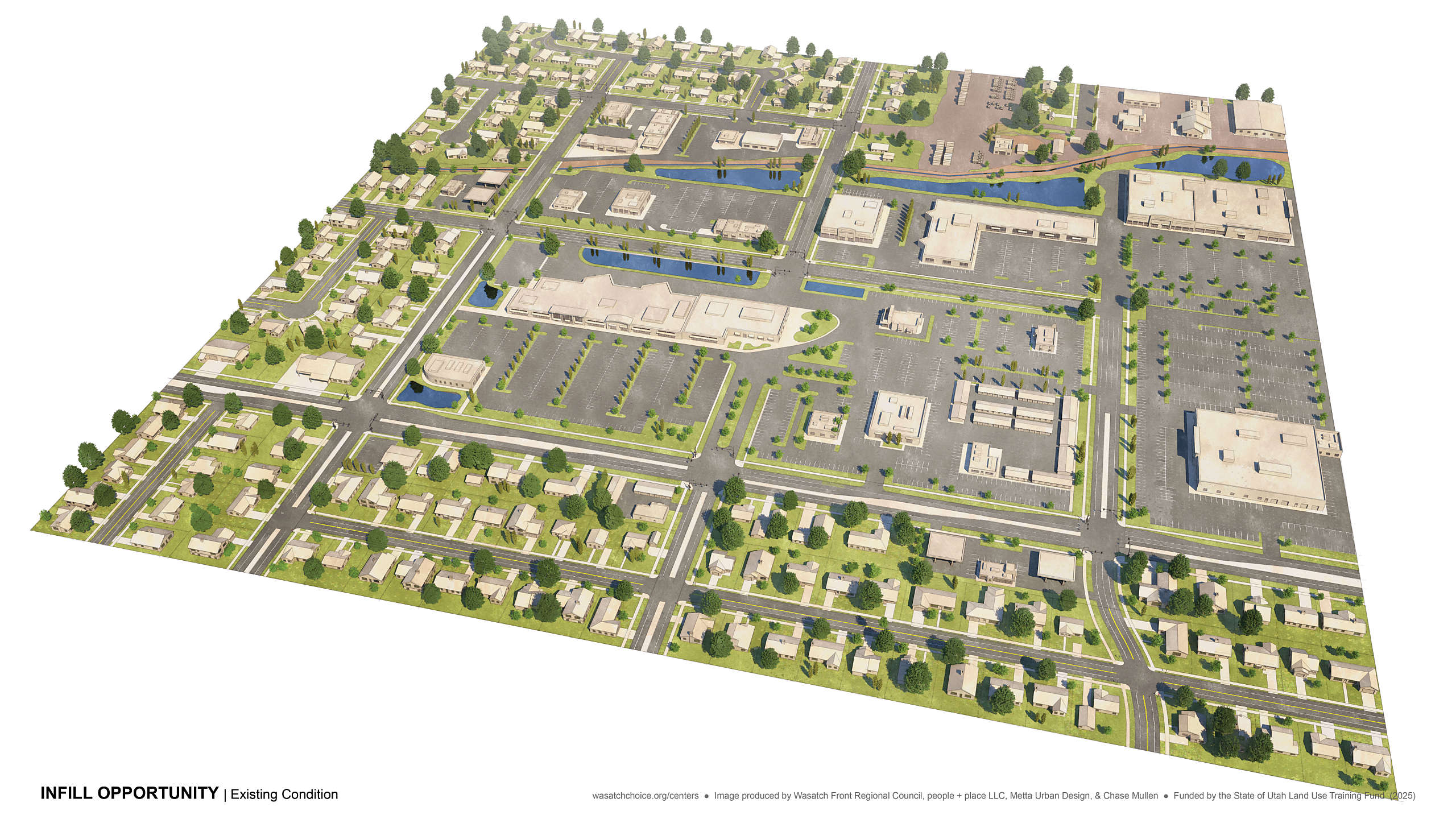
Existing Conditions

A city may have a historic center in need of some attention, or a city may want to establish a new downtown or center. Here’s an example of a city with large blocks of aging commercial space adjacent to a major road and nearby by existing neighborhoods. Places like this are common in many cities, and often they have tremendous redevelopment opportunity.

Future Scenario

At an urban scale, up to six stories high, a center generally provides regional scale employment and destination open spaces. Most parking is available internal to buildings, not in surface parking lots, and many access the area by bus rapid transit. Step downs to three story buildings between the urban center and existing residential areas keep the transition from lower intensity spaces to higher intensity spaces comfortable.

Before imageAfter image

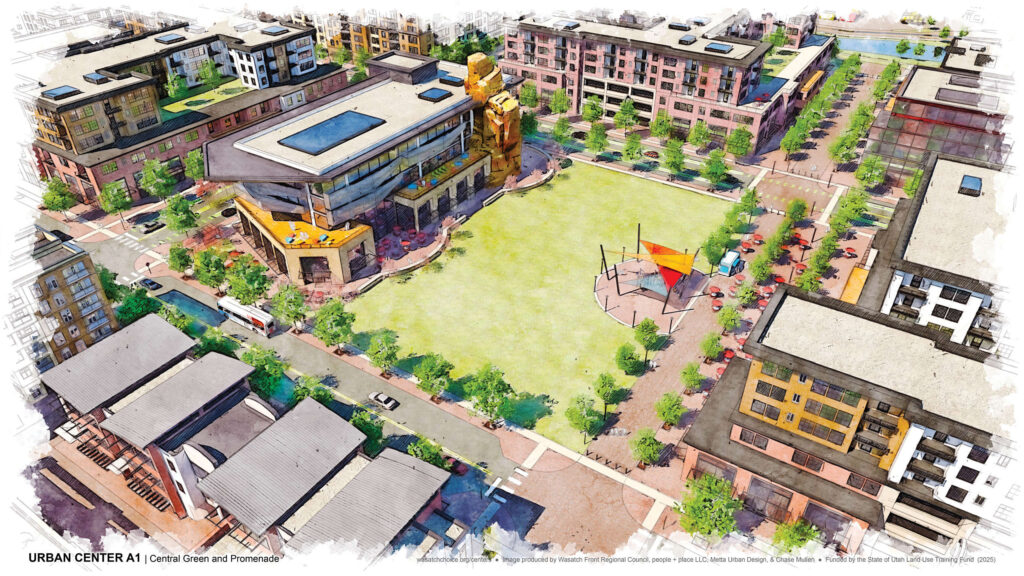
Central Green and Promenade

Close Up: Central Green and Promenade

Pedestrian Friendly Residential Street

Close Up: Pedestrian Friendly Residential Street

Central Green and Promenade

As a city grows, a city center may transform into an urban center. The existing pattern of smaller blocks and street connections make this a flexible space that adapts well to more intense uses over time. The public spaces, like the park in the center, the pedestrian network of tree-lined sidewalks, and the water features all become more important.

Expanded Housing Variety
A mix of housing types and sizes—
ranging from middle housing options
to multi-story apartments and condos
—support diverse household needs
and life stages.

Gathering Space
A welcoming public area—like a plaza,
park, promenade, or green— offers
space for people to meet, relax, and
build community connections.

Complete Streets
Tree-lined streets provide shade and
are designed to support walking,
biking, riding transit, and driving for
safer, more inclusive public spaces.

Vertical Mixed-use
Buildings with ground floor
commercial or live/work space can
accommodate apartments, condos, or
office uses on upper floors.

Civic Uses & Institutional Uses
Civic uses such as libraries, city halls,
community centers, or institutional
uses such as schools or hospitals—
provide stable jobs, while anchoring
community life by supporting with
local services, engagement, and
shared identity.

Transit Demand
Added housing and businesses
increase demand for bus transit
service as an additional
transportation choice.

Shared Parking
Shared parking includes on-street
parking, and parking structures
placed behind buildings or wrapped
within buildings.

Neighborhood Services
Everyday essentials—like grocery
stores, schools, clinics, and cafés—
located close to homes support
convenience and reduce the need to
drive.

Close Up: Central Green and Promenade

Destination-worthy open spaces are a part of great urban centers, providing a daily amenity for local residents and workers but also a reason for others to visit and spend time.

Expanded Housing Variety
A mix of housing types and sizes—
ranging from middle housing options
to multi-story apartments and condos
—support diverse household needs
and life stages.

Gathering Space
A welcoming public area—like a plaza,
park, promenade, or green— offers
space for people to meet, relax, and
build community connections.

Complete Streets
Tree-lined streets provide shade and
are designed to support walking,
biking, riding transit, and driving for
safer, more inclusive public spaces.

Vertical Mixed-use
Buildings with ground floor
commercial or live/work space can
accommodate apartments, condos, or
office uses on upper floors.

Civic Uses & Institutional Uses
Civic uses such as libraries, city halls,
community centers, or institutional
uses such as schools or hospitals—
provide stable jobs, while anchoring
community life by supporting with
local services, engagement, and
shared identity.

Transit Demand
Added housing and businesses
increase demand for bus transit
service as an additional
transportation choice.

Shared Parking
Shared parking includes on-street
parking, and parking structures
placed behind buildings or wrapped
within buildings.

Neighborhood Services
Everyday essentials—like grocery
stores, schools, clinics, and cafés—
located close to homes support
convenience and reduce the need to
drive.

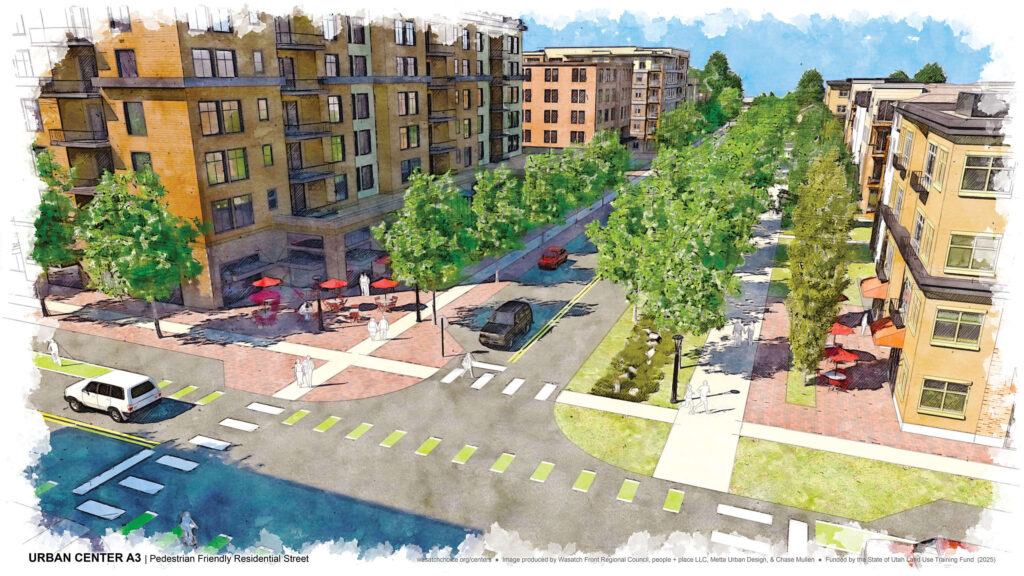
Pedestrian Friendly Residential Street

Residents living on a primarily residential road in an urban center enjoy corner retail and a walkable street.

Expanded Housing Variety
A mix of housing types and sizes—
ranging from middle housing options
to multi-story apartments and condos
—support diverse household needs
and life stages.

Local Focus
A central spot—like a small plaza,
pocket park, or street-side dining
areas invites people to gather and
connect.

Complete Streets
Tree-lined streets provide shade and
are designed to support walking,
biking, riding transit, and driving for
safer, more inclusive public spaces.

Vertical Mixed-use
Buildings with ground floor
commercial or live/work space can
accommodate apartments, condos, or
office uses on upper floors.

Neighborhood Services
Everyday essentials—like grocery
stores, schools, clinics, and cafés—
located close to homes support
convenience and reduce the need to
drive.

Pedestrian Infrastructure
Improvements

Targeted upgrades—like new
sidewalks, curb extensions, and
shorter crossings—make walking
safer, easier, and more appealing.

Green Infrastructure
Nature-based systems include
bioswales, permeable paving, and tree
canopies manage stormwater,
improve air quality, and enhance
urban resilience.

Bicycle Infrastructure
Improvements

Bike lanes, trails, and crossings make
cycling safer, more comfortable, and
better connected to key destinations.

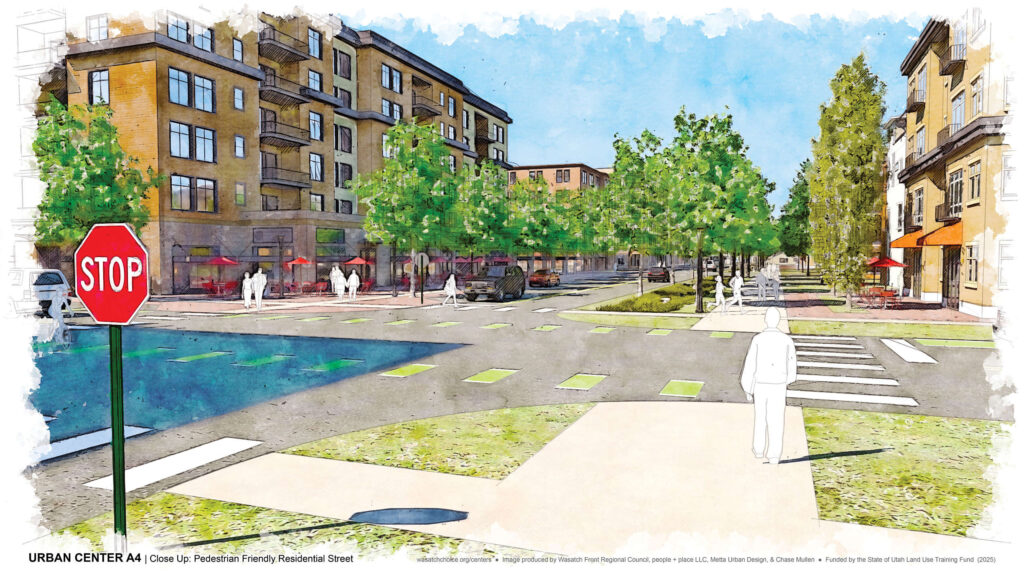
Close Up: Pedestrian Friendly Residential Street

Complete streets and a sustainable, attractive urban stream create a livable environment. Small plazas and pocket parks invite neighbors to gather, making the street both functional and community-focused.

Expanded Housing Variety
A mix of housing types and sizes—
ranging from middle housing options
to multi-story apartments and condos
—support diverse household needs
and life stages.

Local Focus
A central spot—like a small plaza,
pocket park, or street-side dining
areas invites people to gather and
connect.

Complete Streets
Tree-lined streets provide shade and
are designed to support walking,
biking, riding transit, and driving for
safer, more inclusive public spaces.

Vertical Mixed-use
Buildings with ground floor
commercial or live/work space can
accommodate apartments, condos, or
office uses on upper floors.

Neighborhood Services
Everyday essentials—like grocery
stores, schools, clinics, and cafés—
located close to homes support
convenience and reduce the need to
drive.

Pedestrian Infrastructure
Improvements

Targeted upgrades—like new
sidewalks, curb extensions, and
shorter crossings—make walking
safer, easier, and more appealing.

Green Infrastructure
Nature-based systems include
bioswales, permeable paving, and tree
canopies manage stormwater,
improve air quality, and enhance
urban resilience.

Bicycle Infrastructure
Improvements

Bike lanes, trails, and crossings make
cycling safer, more comfortable, and
better connected to key destinations.

Urban Center B

Residential, Shopping & Employment; Rail Transit

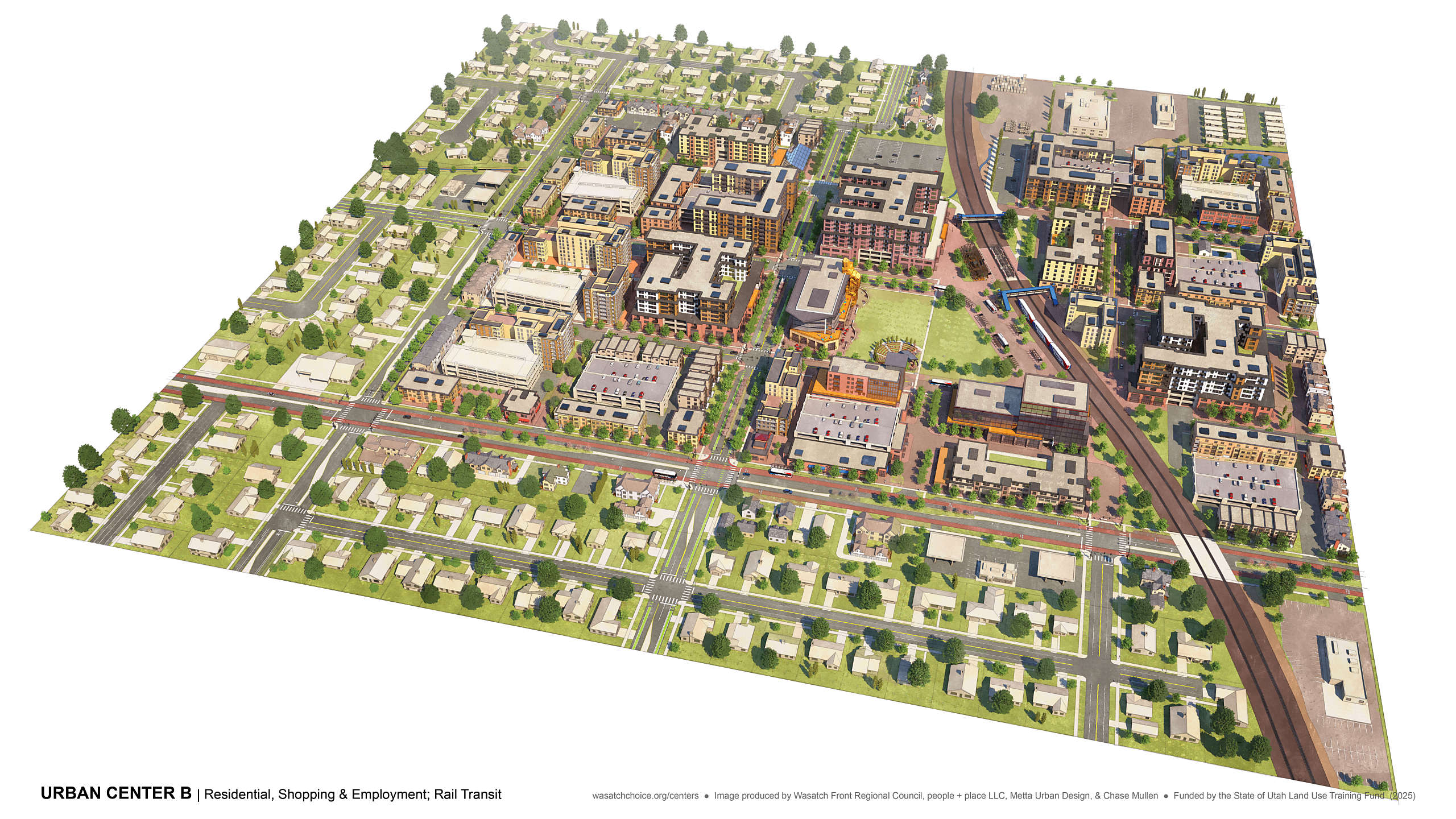
Imagine an urban center connected to the region by commuter or light rail. This is an area rich with places to live and work but also with destination spaces for the city and region to enjoy. You could take the train to a concert at the amphitheater or to a restaurant on the green. Or maybe you live or work in a nearby building and enjoy daily views of all the activity.

3-8

Floors

20-65

DUs / AC

20-30

Jobs / AC

Block Pattern

Structured Parking

Bus Rapid Transit & Rail

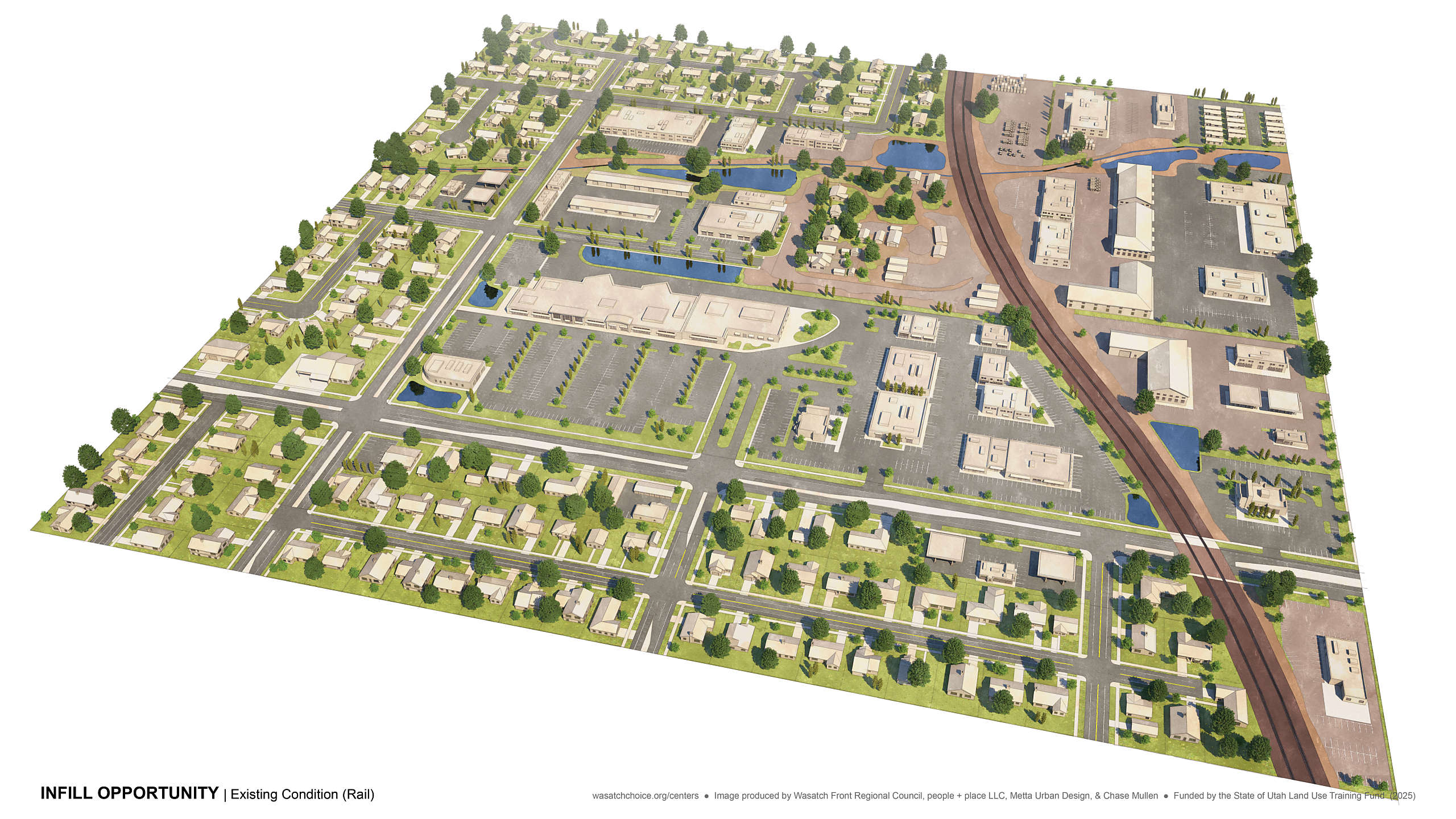
Existing Conditions

Here’s an area common to many cities—an older part of town along a rail line. The area is characterized by large parcels of aging commercial and industrial uses, few connected roads, and little walkability. The railway creates a physical barrier, but it also provides an opportunity to explore transit.

Future Scenario

Rail transit connects this urban center to the region, welcoming people to the area with a destination public space. It provides more robust regional employment opportunities and additional ground-level retail and services. Almost all parking is internal to buildings, and streets offer safe and comfortable use for people, bikes, cars, and buses. Midblock pedestrian pathways make traveling on foot especially easy.

Before imageAfter image

Central Green and Promenade with Rail Transit

Transition from Urban Center to Residential Neighborhood

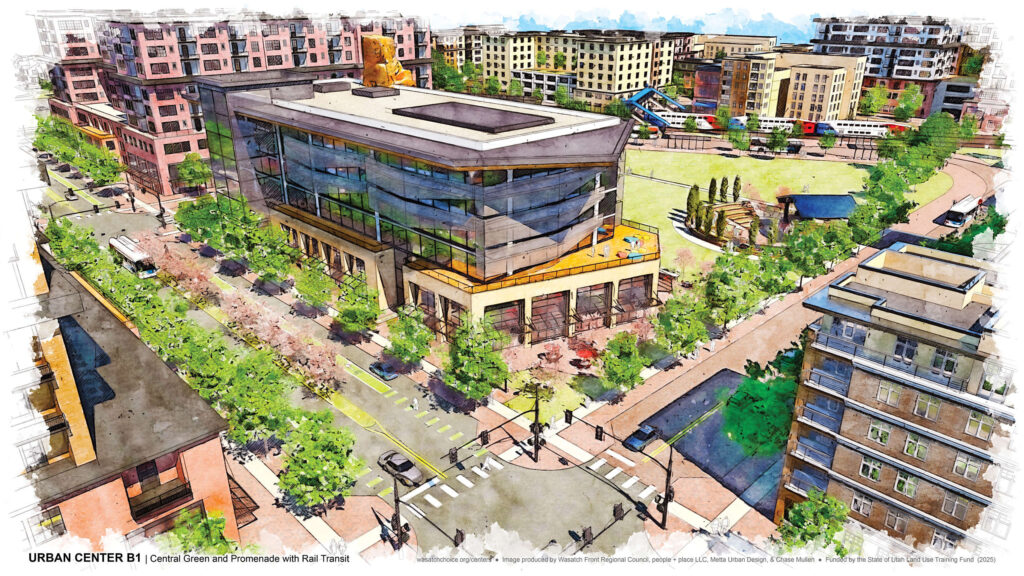
Central Green and Promenade with Rail Transit

This urban center draws workers and visitors from the region with rail access.

Expanded Housing Variety
A mix of housing types and sizes—
ranging from middle housing options
to multi-story apartments and condos
—support diverse household needs
and life stages.

Gathering Space
A welcoming public area—like a plaza,
park, promenade, or green— offers
space for people to meet, relax, and
build community connections.

Complete Streets
Tree-lined streets provide shade and
are designed to support walking,
biking, riding transit, and driving for
safer, more inclusive public spaces.

Vertical Mixed-use
Buildings with ground floor
commercial or live/work space can
accommodate apartments, condos, or
office uses on upper floors.

Civic Uses & Institutional Uses
Civic uses such as libraries, city halls,
community centers, or institutional
uses such as schools or hospitals—
provide stable jobs, while anchoring
community life by supporting with
local services, engagement, and
shared identity.

Transit Demand
Added housing and businesses
increase demand for bus transit
service as an additional
transportation choice.

Shared Parking
Shared parking includes on-street
parking, and parking structures
placed behind buildings or wrapped
within buildings.

Neighborhood Services
Everyday essentials—like grocery
stores, schools, clinics, and cafés—
located close to homes support
convenience and reduce the need to
drive.

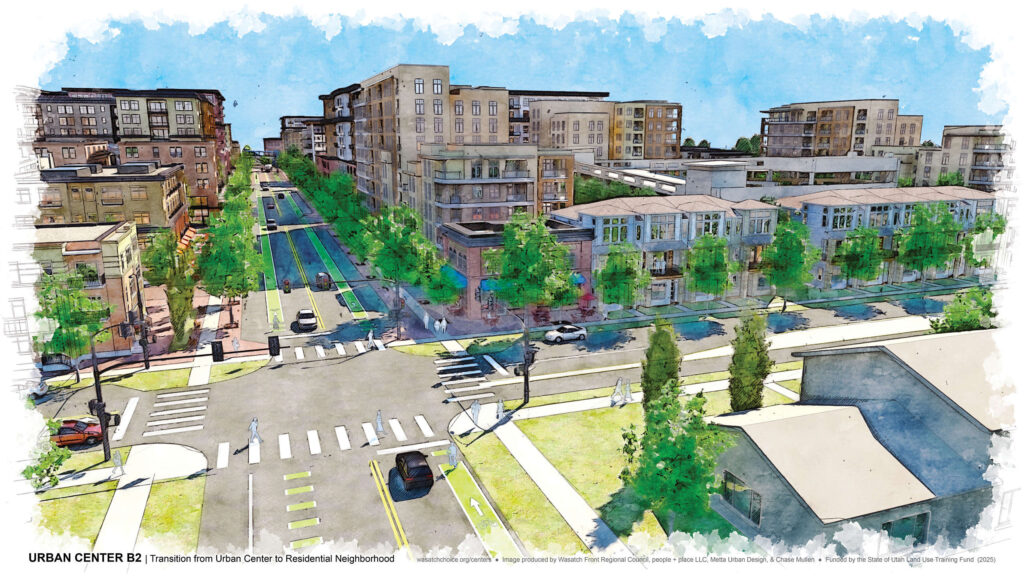
Transition from Urban Center to Residential Neighborhood

Thoughtful transitions from a more intense urban center to less intense parts of the city make the city as a whole more comfortable.

Expanded Housing Variety
A mix of housing types and sizes—
ranging from middle housing options
to multi-story apartments and condos
—support diverse household needs
and life stages.

Complete Streets
Tree-lined streets provide shade and
are designed to support walking,
biking, riding transit, and driving for
safer, more inclusive public spaces.

Vertical Mixed-use
Buildings with ground floor
commercial or live/work space can
accommodate apartments, condos, or
office uses on upper floors.

Shared Parking
Shared parking includes on-street
parking, and parking structures
placed behind buildings or wrapped
within buildings.

Neighborhood Services
Everyday essentials—like grocery
stores, schools, clinics, and cafés—
located close to homes support
convenience and reduce the need to
drive.

Height Transition
A gradual change in building heights
provides a smooth visual and physical
shift between taller development and
lower-scale neighborhoods.

Pedestrian Infrastructure
Improvements

Targeted upgrades—like new
sidewalks, curb extensions, and
shorter crossings—make walking
safer, easier, and more appealing.

Bicycle Infrastructure
Improvements

Bike lanes, trails, and crossings make
cycling safer, more comfortable, and
better connected to key destinations.

Download Resources

Interested in using visualizing centers resources in your community? Download the desired package from the links below.