City Center
City Center
City Center

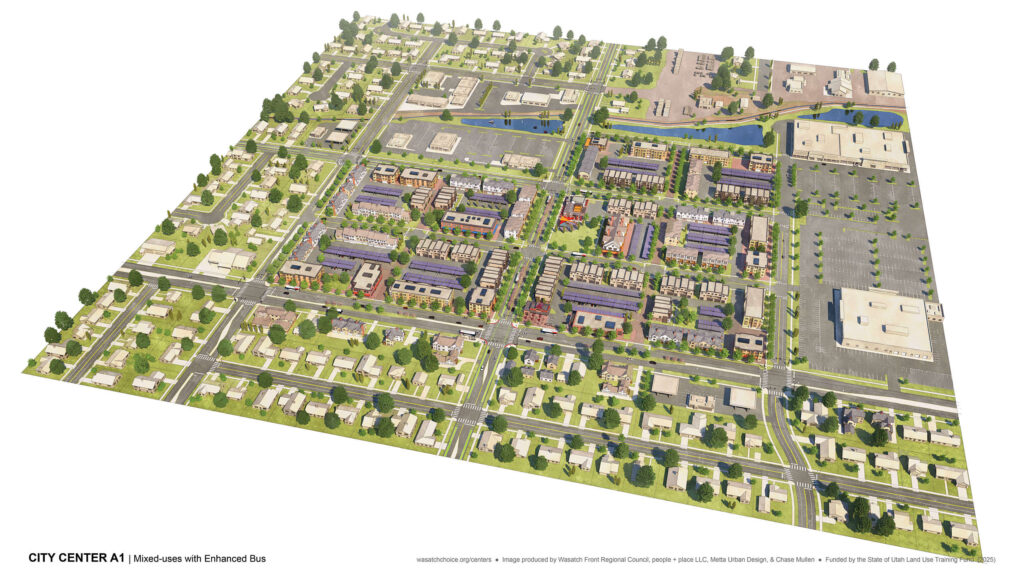
City Center A1

Mixed-uses with Enhanced Bus

Envision what a city center in your community could be—a place to gather and relax with friends and family, a place to shop and dine by a park in the shade of trees. Maybe you took the bus or a bike there, or maybe you live in a condo above one of the businesses. Either way, there’s convenient access to quality amenities.

2-3

Floors

12-40

DUs / AC

16-20

Jobs / AC

Block Pattern

Surface/Tuck-under Parking

Enhanced Bus Service

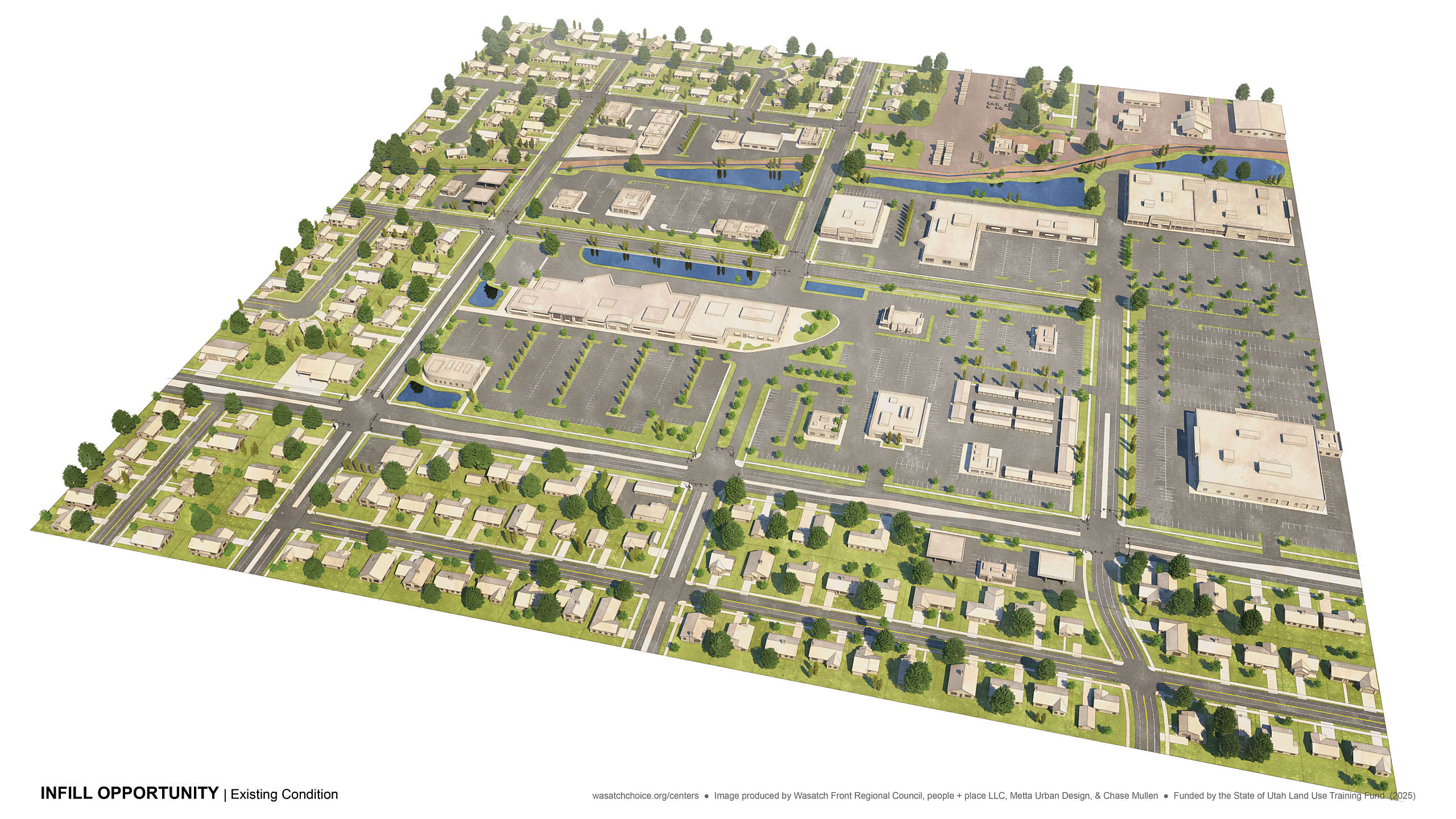
Existing Conditions

A city may have a historic center in need of some attention, or a city may want to establish a new center. Here’s an example of a city with large blocks of aging commercial space adjacent to a major road and nearby by existing neighborhoods. Places like this are common in many cities, and often they have tremendous redevelopment opportunity.

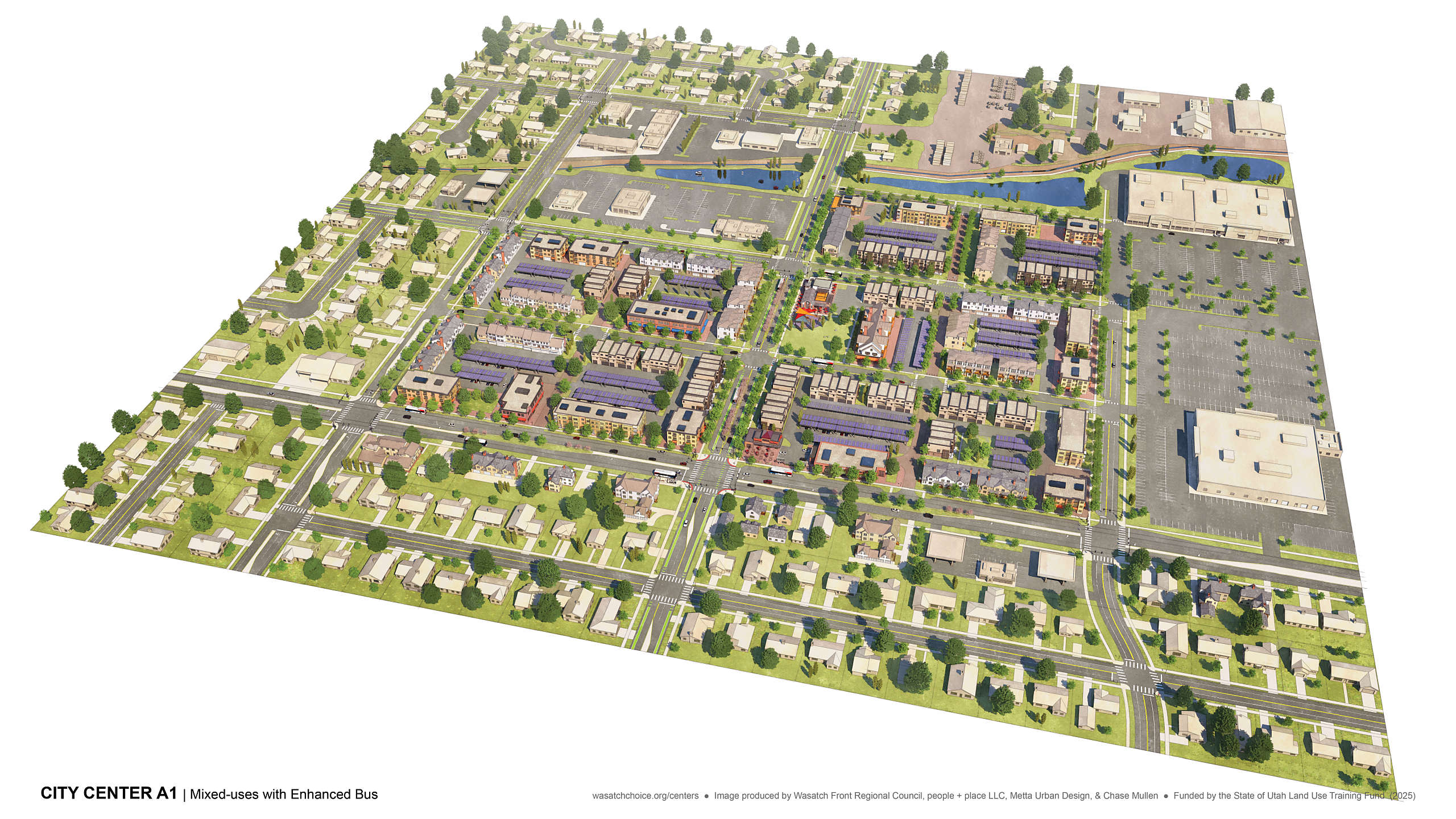
Future Scenario

The area could transform into a center that includes buildings up to three stories high, expanding housing choices to include townhomes, twinhomes, apartments, condos, and small lot single family houses. Blocks are smaller and more walkable, and the center is supported by enhanced bus with more frequent service. The additional housing supports and strengthens existing retail, and nearby single-family neighborhoods enjoy better access to a range of amenities, goods, and services at several new commercial and gathering spaces. Lower intensity areas nearby existing neighborhoods ensure comfortable transitions.

Before imageAfter image
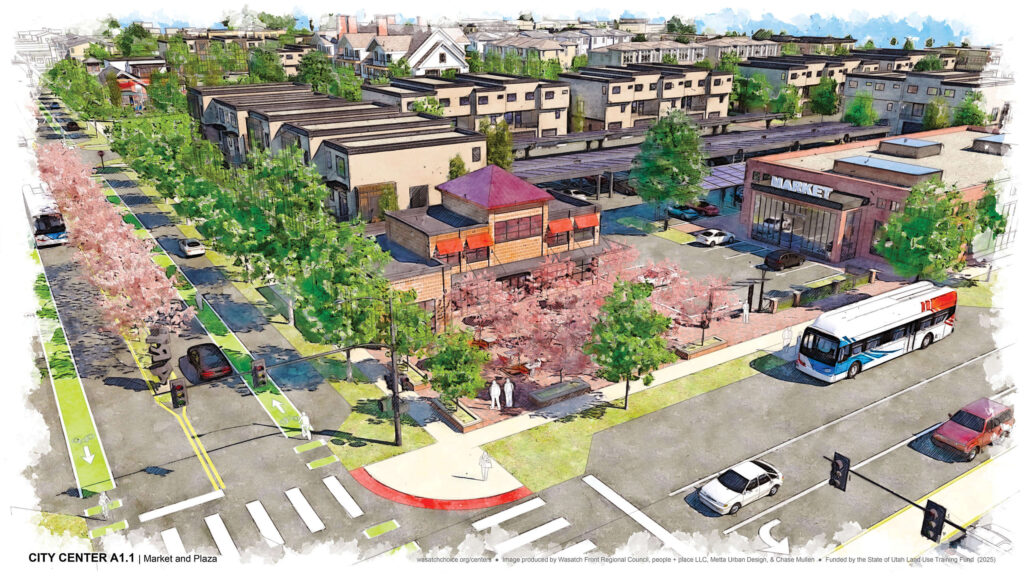
Market and Plaza

This commercial area provides the city center with a market adjacent to a plaza and smaller shops and offices.

Expanded Housing Variety
A mix of housing types and sizes
ranging from middle housing options
to apartments and condos—support
diverse household needs and life
stages.

Gathering Space
A welcoming public area—like a plaza,
park, or green— offers space for
people to meet, relax, and build
community connections.

Neighborhood Services
Everyday essentials—like grocery
stores, schools, clinics, and cafés—
located close to homes support
convenience and reduce the need to
drive.

Live-work Uses
Flexible building design combines
living space with optional ground
floor small business or studio spaces,
supporting entrepreneurship and
vibrant street life.

Screened Shared Parking
Shared parking includes on-street
parking and surface parking tucked
behind buildings. Parking is adequate
but not prominent, keeping the
streets walkable and pleasant.

Transit Demand
Added housing and businesses
increase demand for enhanced bus
service as an additional
transportation choice.

Pedestrian Infrastructure
Improvements

Targeted upgrades—like new
sidewalks, curb extensions, and
shorter crossings—make walking
safer, easier, and more appealing.

Complete Streets
Tree-lined streets provide shade and
are designed to support walking,
biking, riding transit, and driving for
safer, more inclusive public spaces.

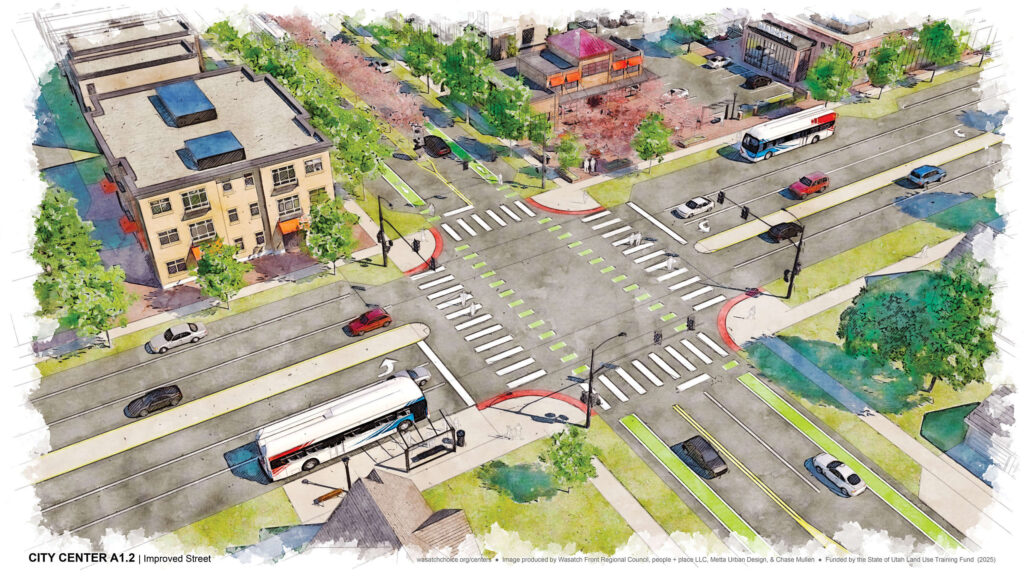
Improved Street

Quality streets and a variety of transportation options are a hallmark of city centers.

Expanded Housing Variety
A mix of housing types and sizes
ranging from middle housing options
to apartments and condos—support
diverse household needs and life
stages.

Gathering Space
A welcoming public area—like a plaza,
park, or green— offers space for
people to meet, relax, and build
community connections.

Neighborhood Services
Everyday essentials—like grocery
stores, schools, clinics, and cafés—
located close to homes support
convenience and reduce the need to
drive.

Live-work Uses
Flexible building design combines
living space with optional ground
floor small business or studio spaces,
supporting entrepreneurship and
vibrant street life.

Vertical Mixed-use
Buildings with ground floor
commercial or live/work space can
accommodate apartments, condos, or
office uses on upper floors.

Transit Demand
Added housing and businesses
increase demand for enhanced bus
service as an additional
transportation choice.

Bicycle Infrastructure
Improvements

Bike lanes, trails, and crossings make
cycling safer, more comfortable, and
better connected to key destinations.

Complete Streets
Tree-lined streets provide shade and
are designed to support walking,
biking, riding transit, and driving for
safer, more inclusive public spaces.

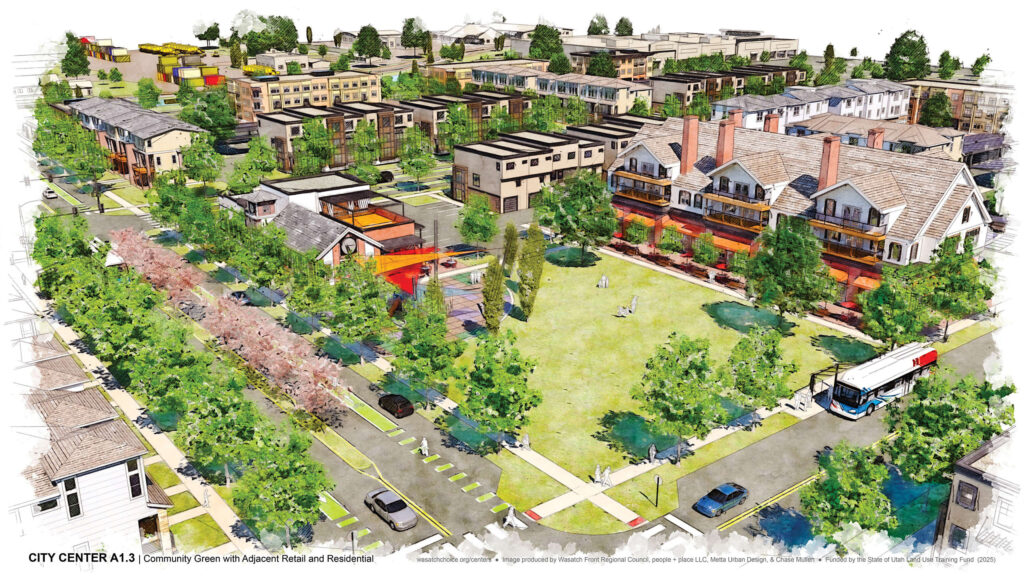
Community Green with Adjacent Retail and Residential

A place to gather and relax with friends and family.

Expanded Housing Variety
A mix of housing types and sizes
ranging from middle housing options
to apartments and condos—support
diverse household needs and life
stages.

Gathering Space
A small multi-use park for all ages
includes play space for families and
children—offering safe, welcoming
places for play, connection, and
shared activities.

Neighborhood Services
Everyday essentials—like grocery
stores, schools, clinics, and cafés—
located close to homes support
convenience and reduce the need to
drive.

Screened Shared Parking
Shared parking includes on-street
parking and surface parking tucked
behind buildings. Parking is adequate
but not prominent, keeping the
streets walkable and pleasant.

Transit Demand
Added housing and businesses
increase demand for enhanced bus
service as an additional
transportation choice.

Bicycle Infrastructure
Improvements

Bike lanes, trails, and crossings make
cycling safer, more comfortable, and
better connected to key destinations.

Complete Streets
Tree-lined streets provide shade and
are designed to support walking,
biking, riding transit, and driving for
safer, more inclusive public spaces.

Vertical Mixed-use
Buildings with ground floor
commercial or live/work space can
accommodate apartments, condos, or
office uses on upper floors.

City Center A2

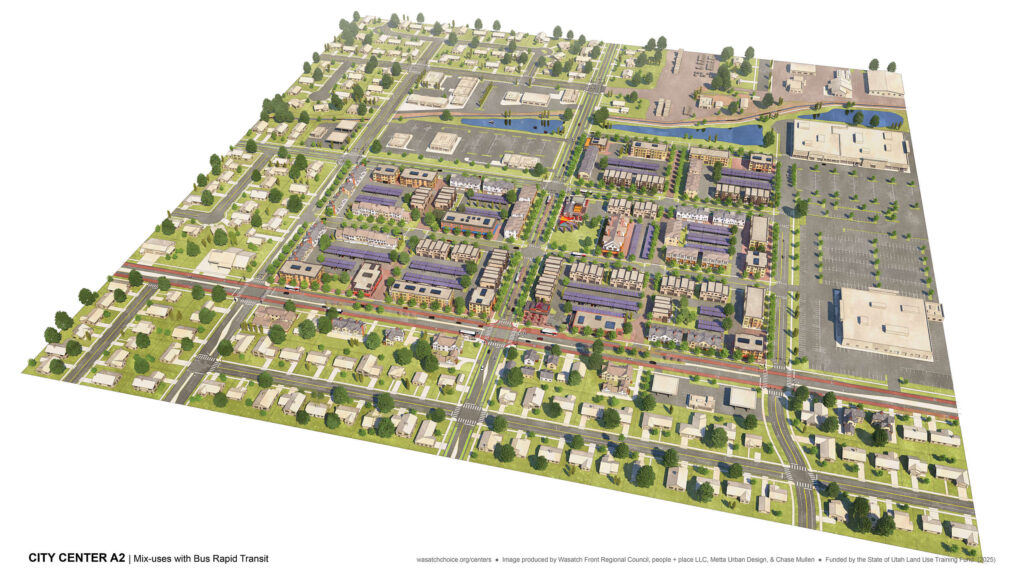
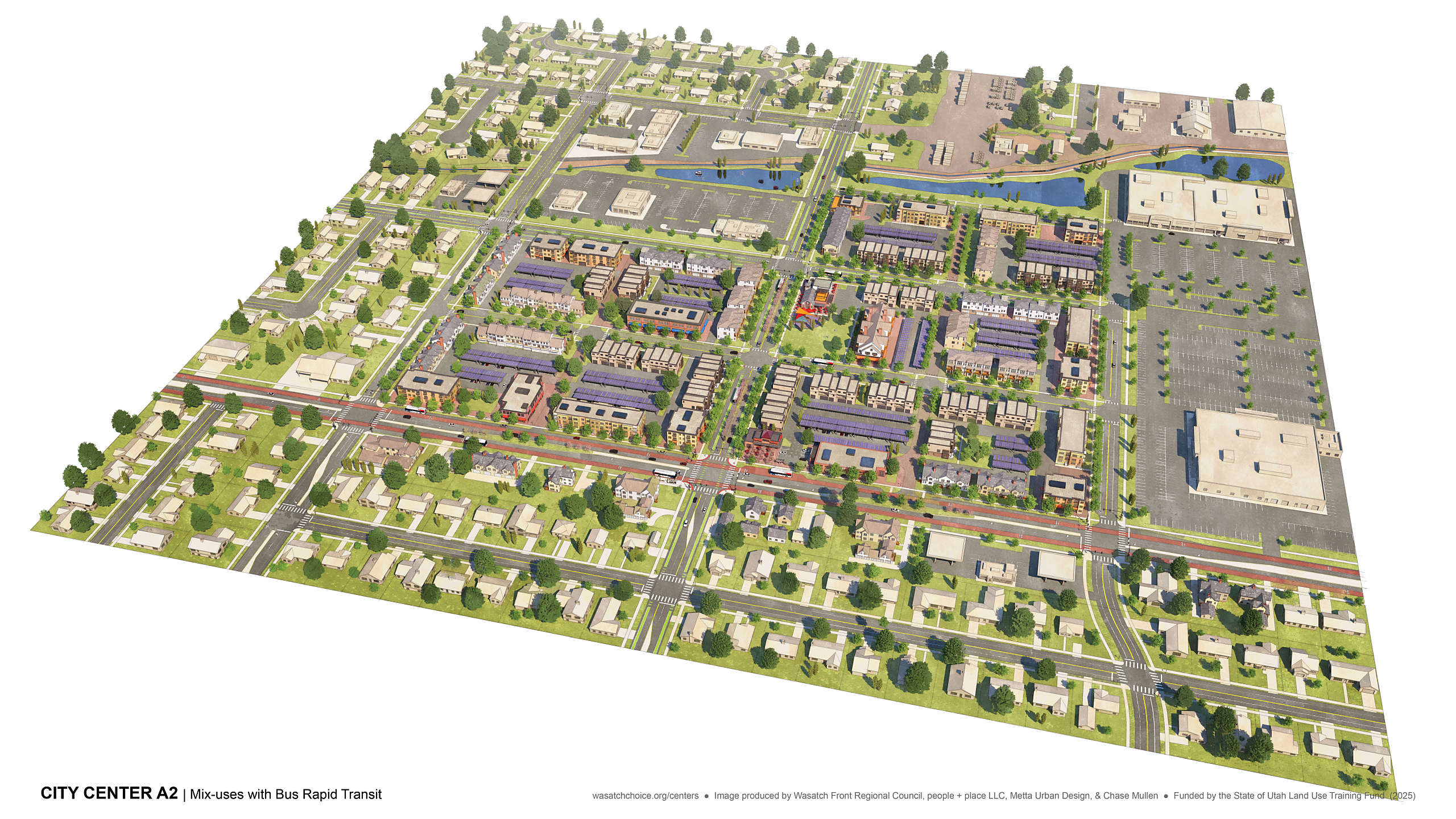
Mixed-uses with Bus Rapid Transit

Envision what a city center in your community could be—a place to gather and relax with friends and family, a place to shop and dine by a park in the shade of trees. Maybe you took the bus or a bike there, or maybe you live in a condo above one of the businesses. Either way, there’s convenient access to quality amenities.

2-3

Floors

12-40

DUs / AC

16-20

Jobs / AC

Block Pattern

Surface/Tuck-under Parking

Bus Rapid Transit

Existing Conditions

A city may have a historic center in need of some attention, or a city may want to establish a new center. Here’s an example of a city with large blocks of aging commercial space adjacent to a major road and nearby by existing neighborhoods. Places like this are common in many cities, and often they have tremendous redevelopment opportunity.

Future Scenario

The area could transform into a center that includes buildings up to three stories high, expanding housing choices to include townhomes, twinhomes, apartments, condos, and small lot single family houses. Blocks are smaller and more walkable, and the center is supported by enhanced bus with more frequent service. The additional housing supports and strengthens existing retail, and nearby single-family neighborhoods enjoy better access to a range of amenities, goods, and services at several new commercial and gathering spaces. Lower intensity areas nearby existing neighborhoods ensure comfortable transitions.
Before imageAfter image

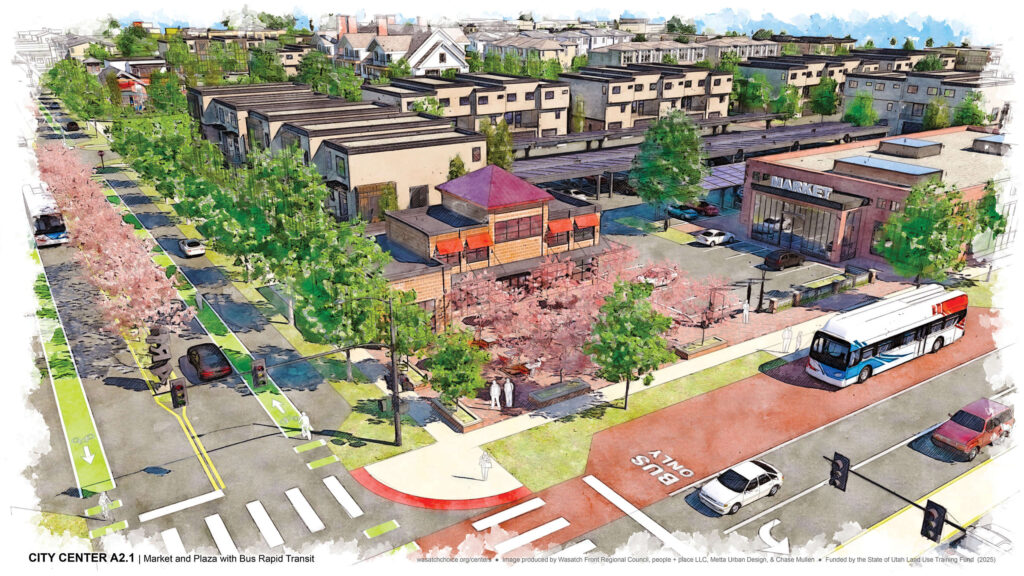
Market and Plaza with Bus Rapid Transit

Market and Plaza with Bus Rapid Transit

This commercial area provides the city center with a market adjacent to a plaza and smaller shops, offices, and enhanced bus service.

Expanded Housing Variety
A mix of housing types and sizes
ranging from middle housing options
to apartments and condos—support
diverse household needs and life
stages.

Gathering Space
A welcoming public area—like a plaza,
park, or green— offers space for
people to meet, relax, and build
community connections.

Neighborhood Services
Everyday essentials—like grocery
stores, schools, clinics, and cafés—
located close to homes support
convenience and reduce the need to
drive.

Vertical Mixed-use
Buildings with ground floor
commercial or live/work space can
accommodate apartments, condos, or
office uses on upper floors.

Screened Shared Parking
Shared parking includes on-street
parking and surface parking tucked
behind buildings. Parking is adequate
but not prominent, keeping the
streets walkable and pleasant.

Transit Demand
Added housing and businesses
increase demand for enhanced bus
service as an additional
transportation choice.

Pedestrian Infrastructure
Improvements

Targeted upgrades—like new
sidewalks, curb extensions, and
shorter crossings—make walking
safer, easier, and more appealing.

Complete Streets
Tree-lined streets provide shade and
are designed to support walking,
biking, riding transit, and driving for
safer, more inclusive public spaces.

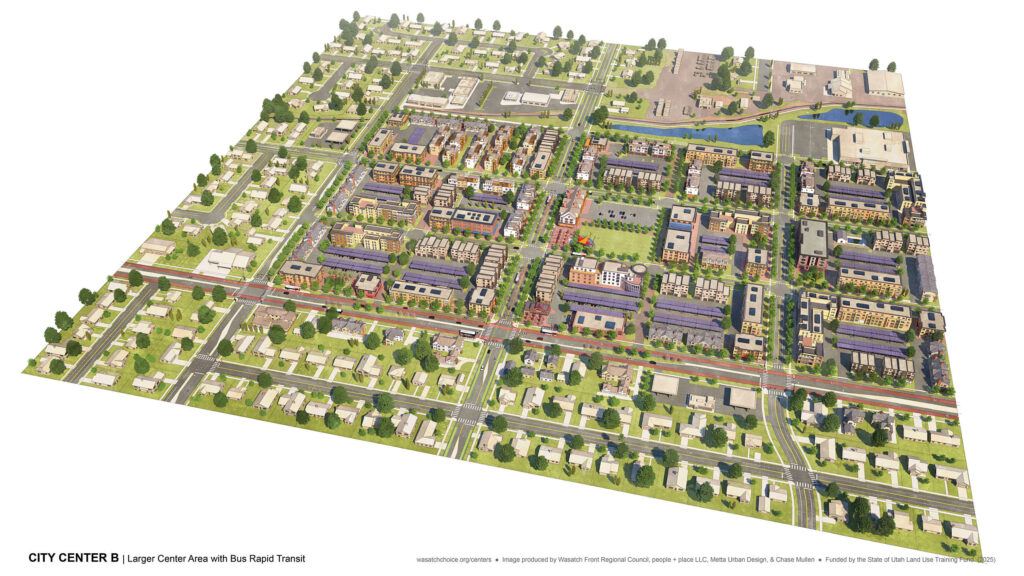
City Center B

Mixed-uses with Enhanced Bus

Envision what a city center in your community could be—a place to gather and relax with friends and family, a place to shop and dine by a park in the shade of trees. Maybe you took the bus or a bike there, or maybe you live in a condo above one of the businesses. Either way, there’s convenient access to quality amenities.

2-4

Floors

12-40

DUs / AC

16-20

Jobs / AC

Block Pattern

Surface/Tuck-under Parking

Bus Rapid Transit

Existing Conditions

A city may have a historic center in need of some attention, or a city may want to establish a new center. Here’s an example of a city with large blocks of aging commercial space adjacent to a major road and nearby by existing neighborhoods. Places like this are common in many cities, and often they have tremendous redevelopment opportunity.

Future Scenario

A city center could also be a bit more intense, with buildings up to four stories, providing space for more housing, shopping, dining, and jobs—with careful and comfortable transitions to existing residential neighborhoods. As intensity increases, more daily trips are likely to be on foot, bike, or transit.

Before imageAfter image

Middle Housing on Pedestrian Friendly Multiuse Corridor

More Residences with Market, Plaza, and Bus Rapid Transit

Buildings Meet the Street with Rear Parking

Close Up: Pedestrian Plaza Near Midblock Parking

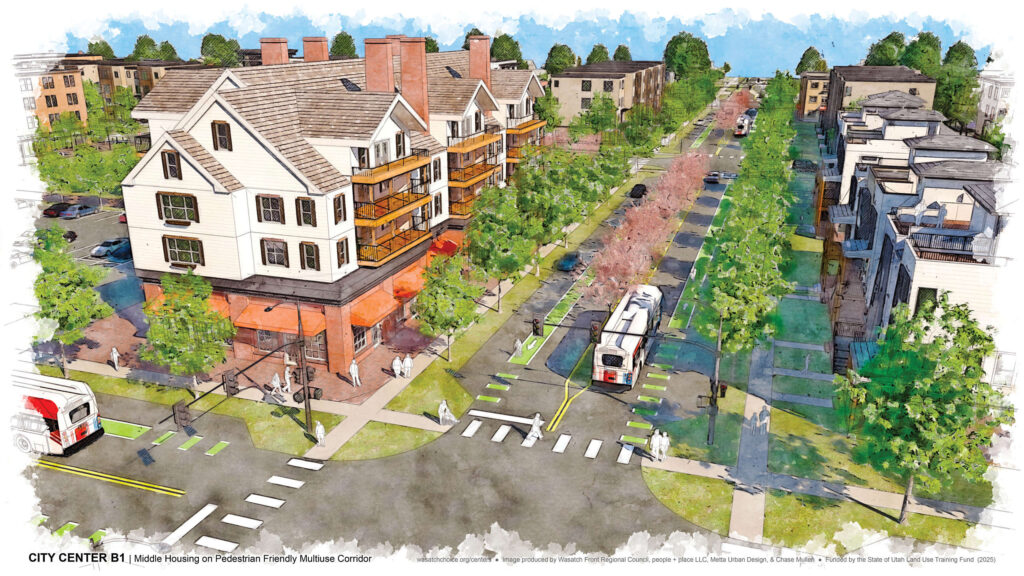
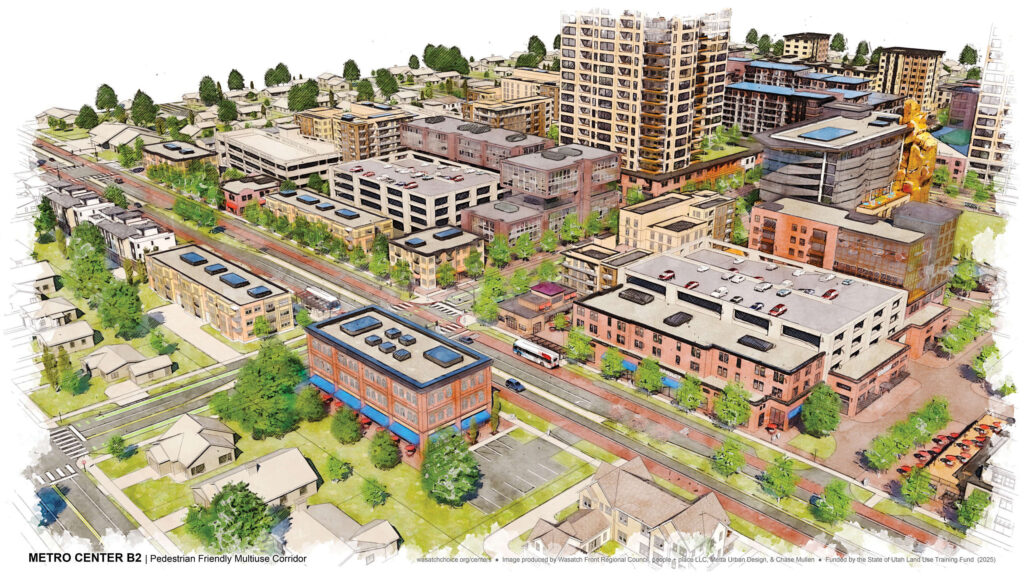
Middle Housing on Pedestrian Friendly Multiuse Corridor

As the intensity of a city center increases to four stories, bus rapid transit and other transportation options work more efficiently.

Expanded Housing Variety
A mix of housing types and sizes
ranging from middle housing options
to apartments and condos—support
diverse household needs and life
stages.

Neighborhood Services
Everyday essentials—like grocery
stores, schools, clinics, and cafés—
located close to homes support
convenience and reduce the need to
drive.

Transit Demand
Added housing and businesses
increase demand for enhanced bus
service as an additional
transportation choice.

Pedestrian Infrastructure
Improvements

Targeted upgrades—like new
sidewalks, curb extensions, and
shorter crossings—make walking
safer, easier, and more appealing.

Complete Streets
Tree-lined streets provide shade and
are designed to support walking,
biking, riding transit, and driving for
safer, more inclusive public spaces.

Bicycle Infrastructure
Improvements

Bike lanes, trails, and crossings make
cycling safer, more comfortable, and
better connected to key destinations.

Screened Shared Parking
Shared parking includes on-street
parking, and surface parking tucked
behind buildings. Parking is adequate
but not prominent, keeping the
streets walkable and pleasant.

Vertical Mixed-use
Buildings with ground floor
commercial or live/work space can
accommodate apartments, condos, or
office uses on upper floors.

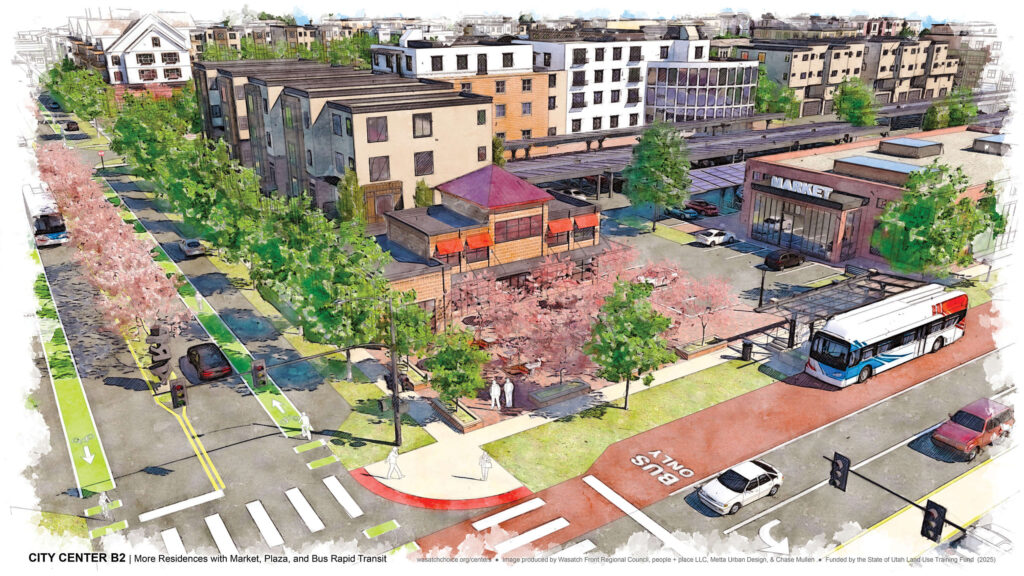
More Residences with Market, Plaza, and Bus Rapid Transit

This commercial area provides the city center with a market adjacent to a plaza and smaller shops and offices.

Expanded Housing Variety
A mix of housing types and sizes
ranging from middle housing options
to apartments and condos—support
diverse household needs and life
stages.

Gathering Space
A welcoming public area—like a plaza,
park, or green— offers space for
people to meet, relax, and build
community connections.

Neighborhood Services
Everyday essentials—like grocery
stores, schools, clinics, and cafés—
located close to homes support
convenience and reduce the need to
drive.

Transit Demand
Added housing and businesses
increase demand for enhanced bus
service as an additional
transportation choice.

Pedestrian Infrastructure
Improvements

Targeted upgrades—like new
sidewalks, curb extensions, and
shorter crossings—make walking
safer, easier, and more appealing.

Complete Streets
Tree-lined streets provide shade and
are designed to support walking,
biking, riding transit, and driving for
safer, more inclusive public spaces.

Bicycle Infrastructure
Improvements

Bike lanes, trails, and crossings make
cycling safer, more comfortable, and
better connected to key destinations.

Screened Shared Parking
Shared parking includes on-street
parking, and surface parking tucked
behind buildings. Parking is adequate
but not prominent, keeping the
streets walkable and pleasant.

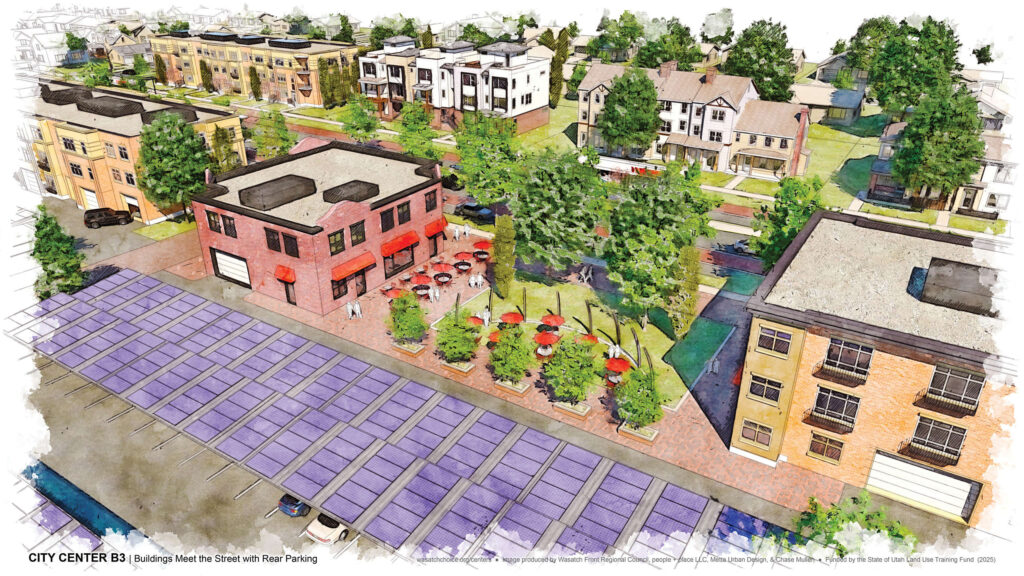
Buildings Meet the Street with Rear Parking

Parking options for a cluster of 2-3 story homes and businesses meets demand.

Expanded Housing Variety
A mix of housing types and sizes
ranging from middle housing options
to apartments and condos—support
diverse household needs and life
stages.

Gathering Space
A welcoming public area—like a plaza,
park, or green— offers space for
people to meet, relax, and build
community connections.

Neighborhood Services
Everyday essentials—like grocery
stores, schools, clinics, and cafés—
located close to homes support
convenience and reduce the need to
drive.

Transit Demand
Added housing and businesses
increase demand for enhanced bus
service as an additional
transportation choice.

Complete Streets
Tree-lined streets provide shade and
are designed to support walking,
biking, riding transit, and driving for
safer, more inclusive public spaces.

Screened Shared Parking
Shared parking includes on-street
parking, and surface parking tucked
behind buildings. Parking is adequate
but not prominent, keeping the
streets walkable and pleasant.

Vertical Mixed-use
Buildings with ground floor
commercial or live/work space can
accommodate apartments, condos, or
office uses on upper floors.

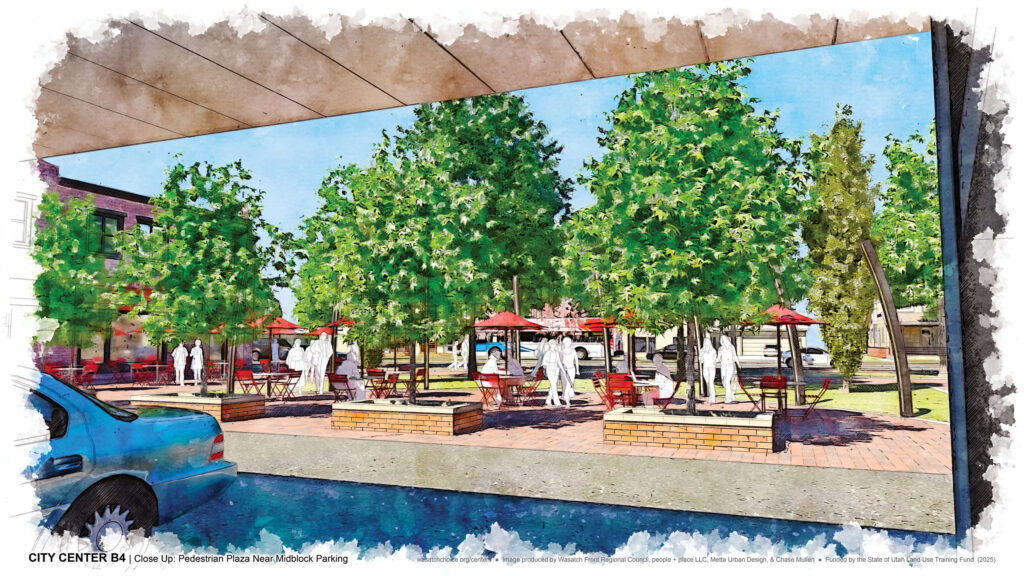
Close Up: Pedestrian Plaza Near Midblock Parking

Looking from a small mid-block shared parking area, this plaza provides gathering space supported by ground floor commercial and nearby housing.

Gathering Space
A welcoming public area—like a plaza,
park, or green— offers space for
people to meet, relax, and build
community connections.

Neighborhood Services
Everyday essentials—like grocery
stores, schools, clinics, and cafés—
located close to homes support
convenience and reduce the need to
drive.

Transit Demand
Added housing and businesses
increase demand for enhanced bus
service as an additional
transportation choice.

Screened Shared Parking
Shared parking includes on-street
parking, and surface parking tucked
behind buildings. Parking is adequate
but not prominent, keeping the
streets walkable and pleasant.

Vertical Mixed-use
Buildings with ground floor
commercial or live/work space can
accommodate apartments, condos, or
office uses on upper floors.

Download Resources

Interested in using visualizing centers resources in your community? Download the desired package from the links below.