Metro Center
Metro Center
Metro Center

Metro Center A

Residential, Shopping & Employment; Rail Transit

Imagine hopping off the train and enjoying your region’s go to spot for a marquee job in an office tower or a great apartment in the sky. The focal point of a region, a metro center serves a wide geographic area, providing a large number of cultural amenities, jobs, dwellings, and commercial services in a relatively small land area.

3-12

Floors

40-90

DUs / AC

25-40

Jobs / AC

Block Pattern

Structured Parking

Bus Rapid Transit & Rail

Existing Conditions

Here’s an area common to many cities—an older part of town along a rail line. The area is characterized by large parcels of aging commercial and industrial uses, few connected roads, and little walkability. The railway creates a physical barrier, but it also provides an opportunity to explore transit.

Future Scenario

Metro centers have significant ground floor retail with upper floor office and residential. Destination activities and open spaces attract people from all over the region.

Before imageAfter image

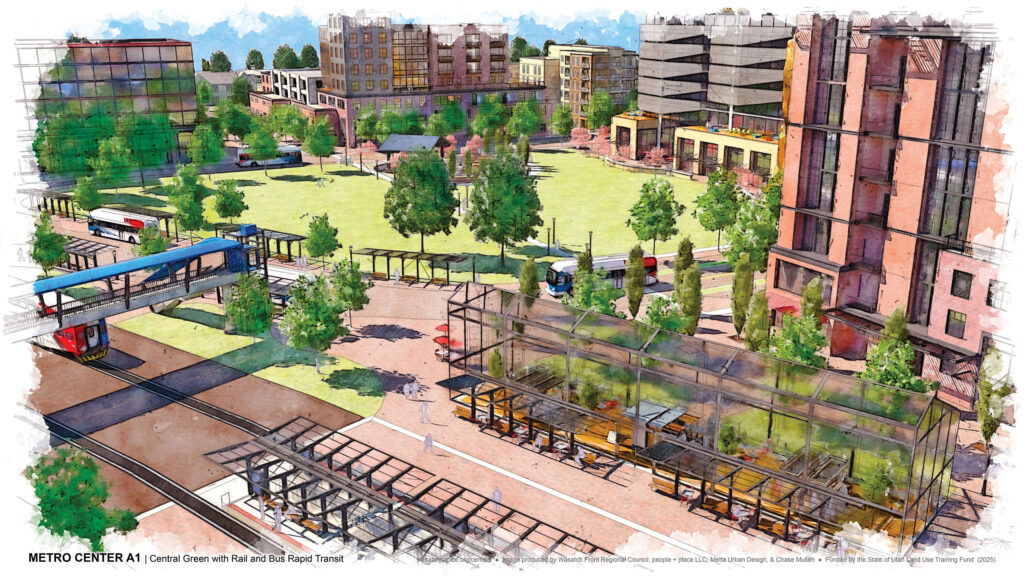
Central Green with Rail and Bus Rapid Transit

Close Up: View of Central Green from a Patio

Central Green with Rail and Bus Rapid Transit

The focal point of the region, this metro center serves a wide geographic area, providing a large public space for cultural amenities, surrounded by jobs, dwellings, and commercial services in a relatively small land area.

Expanded Housing Variety
A mix of housing types and sizes—
ranging from middle housing options
to multi-story apartments and condos
—support diverse household needs
and life stages.

Neighborhood Services
Everyday essentials—like grocery
stores, schools, clinics, and cafés—
located close to homes support
convenience and reduce the need to
drive.

Vertical Mixed-use
Buildings with ground floor
commercial or live/work space can
accommodate apartments, condos, or
office uses on upper floors.

Civic Uses & Institutional Uses
Civic uses such as libraries, city halls,
community centers, or institutional
uses such as schools or hospitals—
provide stable jobs, while anchoring
community life by supporting with
local services, engagement, and
shared identity.

Event Spaces
Designated areas—such as plazas,
greens, or amphitheaters—enable
community gatherings, performances,
markets, and festivals.

Transit Amenities
Features like shelters, seating,
lighting, and real-time information
make using transit more comfortable,
convenient, and accessible.

Regional Transit Hub
A major transit station where
multiple bus and rail lines meet,
provides seamless connections for
regional travel and supports higher-
intensity, mixed-use development
nearby.

Shared Parking
Shared parking includes on-street
parking, and parking structures
placed behind buildings or wrapped
within buildings.

Close Up: View of Central Green from a Patio

High quality outdoor spaces are often key parts of a metro center, providing space for people across the region to enjoy in informal ways or at organized events, like concerts or festivals.

Expanded Housing Variety
A mix of housing types and sizes—
ranging from middle housing options
to multi-story apartments and condos
—support diverse household needs
and life stages.

Civic & Institutional Uses
Civic uses such as libraries, city halls,
community centers, or institutional
uses such as schools or hospitals—
provide stable jobs, while anchoring
community life by supporting with
local services, engagement, and
shared identity.

Vertical Mixed-use
Buildings with ground floor
commercial or live/work space can
accommodate apartments, condos, or
office uses on upper floors.

Regional Transit Hub
A major transit station where
multiple bus and rail lines meet,
provides seamless connections for
regional travel and supports higher-
intensity, mixed-use development
nearby.

Gathering Space
A welcoming public area—like a plaza,
park, or green— offers space for
people to meet, relax, and build
community connections.

Event Spaces
Designated areas—such as plazas,
greens, or amphitheaters—enable
community gatherings, performances,
markets, and festivals.

Pedestrian Focused Streets
Streets designed to prioritize people
on foot, with wide sidewalks, safe
crossings, and features encourage
walking and social interaction.

Shared Parking
Shared parking includes on-street
parking, and parking structures
placed behind buildings or wrapped
within buildings.

Metro Center B

Point Towers; Rail Transit

Imagine hopping off the train and enjoying your region’s go to spot for a marquee job in an office tower or a great apartment in the sky. The focal point of a region, a metro center serves a wide geographic area, providing a large number of cultural amenities, jobs, dwellings, and commercial services in a relatively small land area.

3-20+

Floors

40-90

DUs / AC

25-40

Jobs / AC

Block Pattern

Structured Parking

Bus Rapid Transit & Rail

Existing Conditions

Here’s an area common to many cities—an older part of town along a rail line. The area is characterized by large parcels of aging commercial and industrial uses, few connected roads, and little walkability. The railway creates a physical barrier, but it also provides an opportunity to explore transit.

Future Scenario

Point towers can bring more intensity to a metro center. With extremely efficient use of land, these towers provide space for large numbers of dwellings and jobs, with parking underground or hidden within the buildings.

Before imageAfter image

Transition to Surrounding Residential Neighborhood

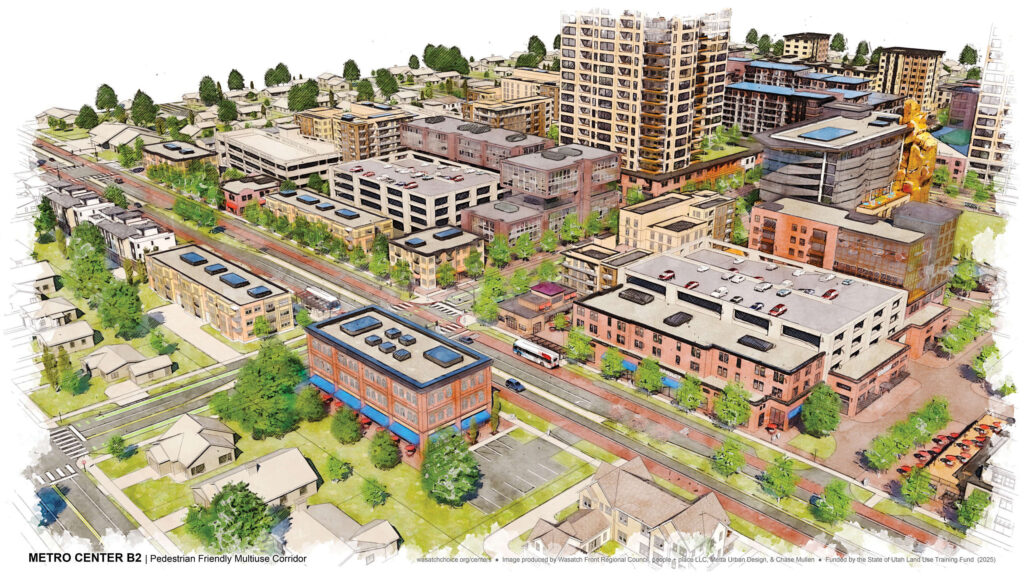
Pedestrian Friendly Multiuse Corridor

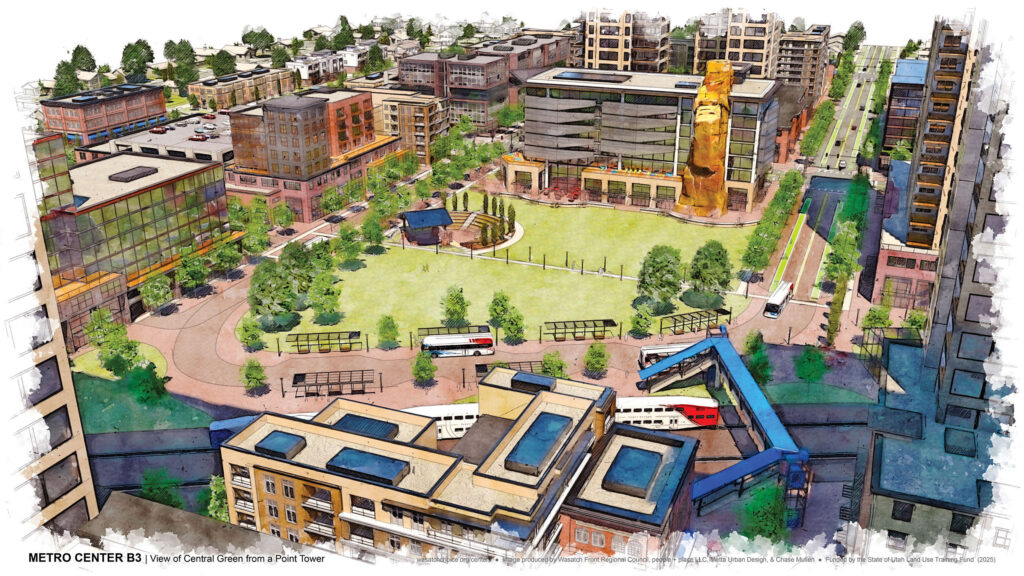
View of Central Green from a Point Tower

Transition to Surrounding Residential Neighborhood

Building heights step down gradually, for a more comfortable transition to lower intensity neighborhoods.

Expanded Housing Variety
A mix of housing types and sizes—
ranging from middle housing options
to multi-story apartments and condos
—support diverse household needs
and life stages.

Height Transition
A gradual change in building heights
provides a smooth visual and physical
shift between taller development and
lower-scale neighborhoods.

Middle Housing
Townhomes or small apartments
create a gentle transition from the
metro center and busy streets to
quieter residential areas, offering
both housing diversity and a
neighborhood buffer.

Event Spaces
Designated areas—such as plazas,
greens, or amphitheaters—enable
community gatherings, performances,
markets, and festivals.

Neighborhood Services
Everyday essentials—like grocery
stores, schools, clinics, and cafés—
located close to homes support
convenience and reduce the need to
drive.

Vertical Mixed-use
Buildings with ground floor
commercial or live/work space can
accommodate apartments, condos, or
office uses on upper floors.

Complete Streets
Tree-lined streets provide shade and
are designed to support walking,
biking, riding transit, and driving for
safer, more inclusive public spaces.

Civic Uses & Institutional Uses
Civic uses such as libraries, city halls,
community centers, or institutional
uses such as schools or hospitals—
provide stable jobs, while anchoring
community life by supporting with
local services, engagement, and
shared identity.

Pedestrian Friendly Multiuse Corridor

In addition to the rail transit, bus rapid transit serves the metro center on a high-quality street.

Expanded Housing Variety
A mix of housing types and sizes—
ranging from middle housing options
to multi-story apartments and condos
—support diverse household needs
and life stages.

Middle Housing
Townhomes or small apartments
create a gentle transition from the
metro center and busy streets to
quieter residential areas, offering
both housing diversity and a
neighborhood buffer.

Height Transition
A gradual change in building heights
provides a smooth visual and physical
shift between taller development and
lower-scale neighborhoods.

Neighborhood Services
Everyday essentials—like grocery
stores, schools, clinics, and cafés—
located close to homes support
convenience and reduce the need to
drive.

Vertical Mixed-use
Buildings with ground floor
commercial or live/work space can
accommodate apartments, condos, or
office uses on upper floors.

Complete Streets
Tree-lined streets provide shade and
are designed to support walking,
biking, riding transit, and driving for
safer, more inclusive public spaces.

Civic Uses & Institutional Uses
Civic uses such as libraries, city halls,
community centers, or institutional
uses such as schools or hospitals—
provide stable jobs, while anchoring
community life by supporting with
local services, engagement, and
shared identity.

Transit Demand
Additional housing and businesses
increase demand for rail and bus
transit service as additional
transportation choices.

View of Central Green from a Point Tower

Point towers provide space for large numbers of jobs and dwellings. Transit moves lots of people.

Expanded Housing Variety
A mix of housing types and sizes—
ranging from middle housing options
to multi-story apartments and condos
—support diverse household needs
and life stages.

Vertical Mixed-use
Buildings with ground floor
commercial or live/work space can
accommodate apartments, condos, or
office uses on upper floors.

Civic Uses & Institutional Uses
Civic uses such as libraries, city halls,
community centers, or institutional
uses such as schools or hospitals—
provide stable jobs, while anchoring
community life by supporting with
local services, engagement, and
shared identity.

Shared Parking
Shared parking includes on-street
parking, and parking structures
placed behind buildings or wrapped
within buildings.

Gathering Space
A welcoming public area—like a plaza,
park, or green— offers space for
people to meet, relax, and build
community connections.

Event Spaces
Designated areas—such as plazas,
greens, or amphitheaters—enable
community gatherings, performances,
markets, and festivals.

Regional Transit Hub
A major transit station where
multiple bus and rail lines meet,
provides seamless connections for
regional travel and supports higher-
intensity, mixed-use development
nearby.

Complete Streets
Tree-lined streets provide shade and
are designed to support walking,
biking, riding transit, and driving for
safer, more inclusive public spaces.

Download Resources

Interested in using visualizing centers resources in your community? Download the desired package from the links below.