Neighborhood Center A
Retail Anchor and Residential
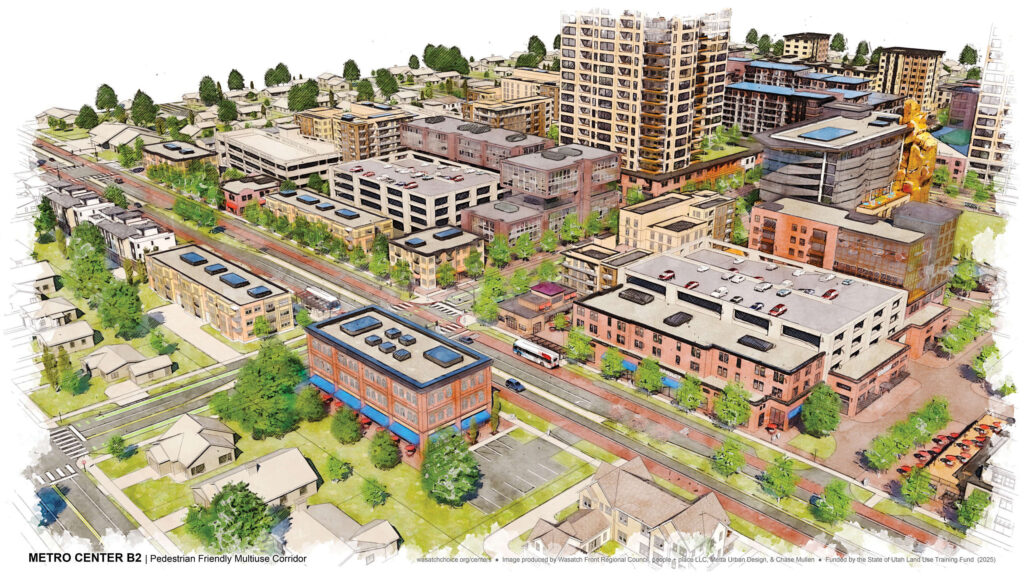
Imagine creating a neighborhood center in your community—a gathering space to connect with one another, maybe grab lunch, let the kids play. Maybe you can even imagine living here, in an apartment above one of the shops or in a nearby townhome. While this series illustrates a new center in a growing area on the edge of a community, a neighborhood center could also emerge over time in an existing part of town.
1-3
Floors
8-24
DUs / AC
10-12
Jobs / AC
Block Pattern
Surface Parking
Local Bus Service
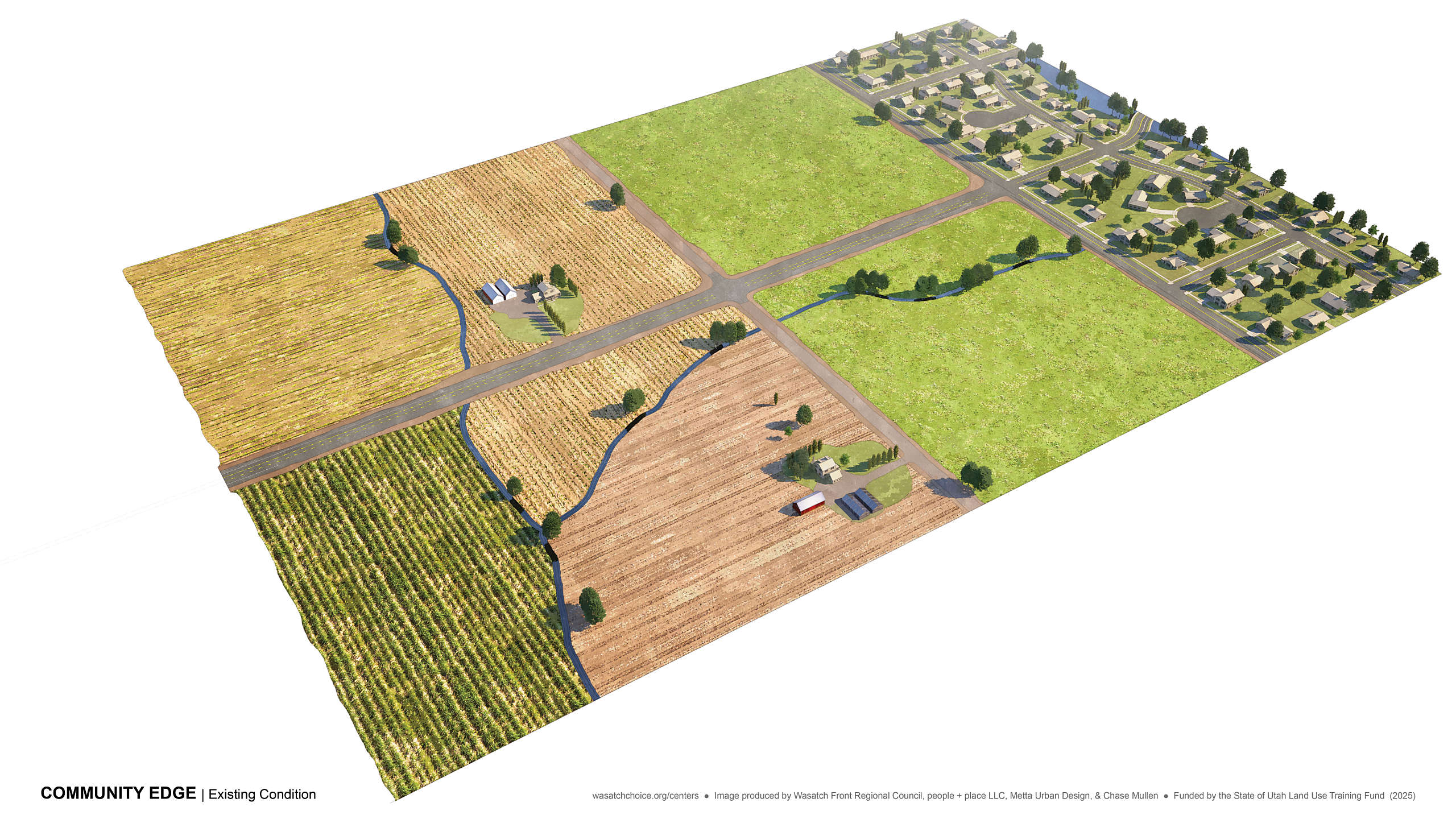
Existing Conditions
Growing communities often have land on the edge of town just beyond existing residential subdivisions that are under increasing growth pressure to annex and develop. Frequently, this land is developed into new suburban housing.
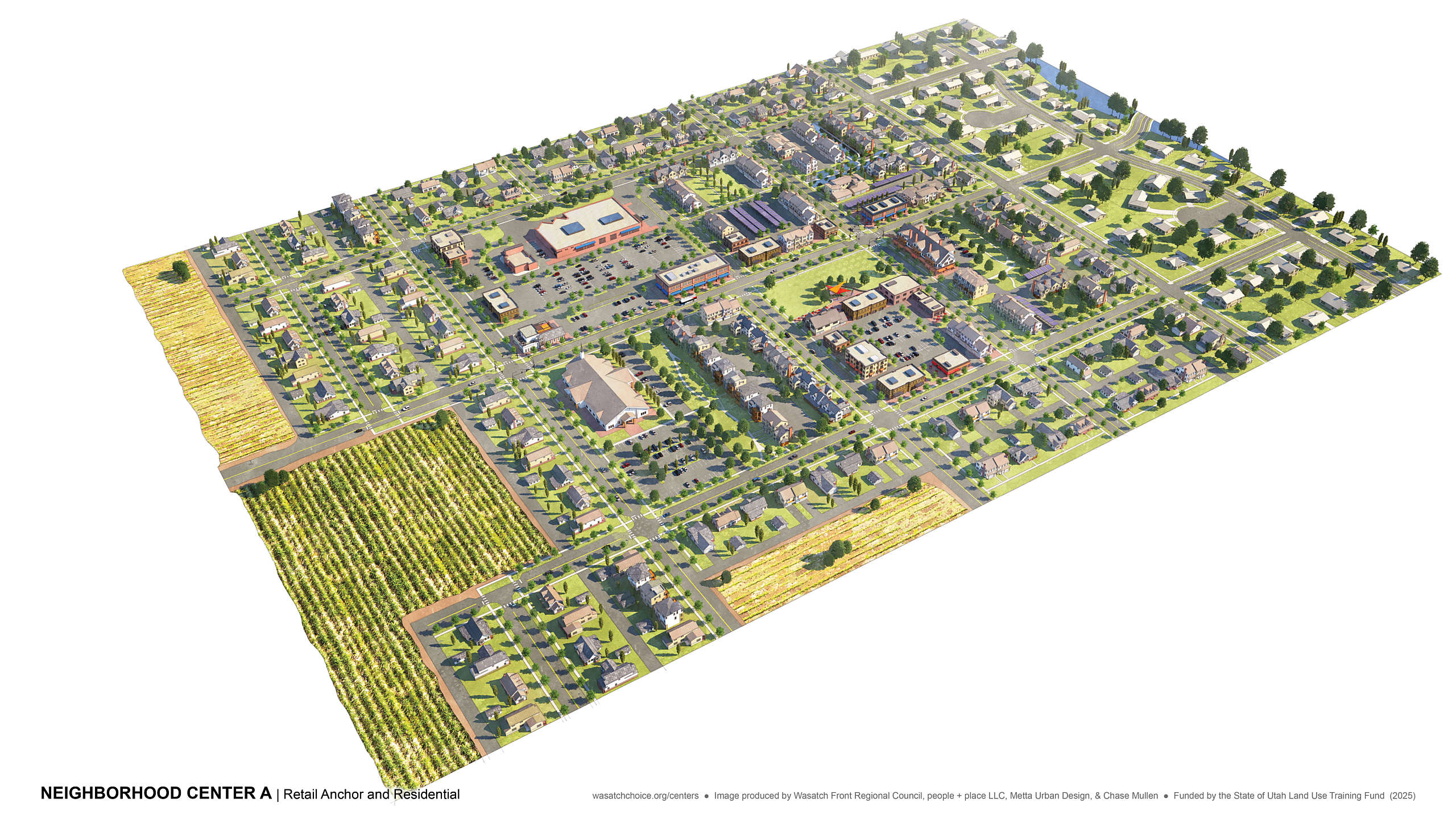
Future Scenario
While this land often becomes new suburban residential housing, it’s interesting to consider opportunity for a neighborhood center in addition to new single-family homes. A neighborhood center can provide suburban communities with gathering spaces, convenient access to goods and services, and more housing options. This scenario shows the transition from vacant land to a coordinated and planned development effort.


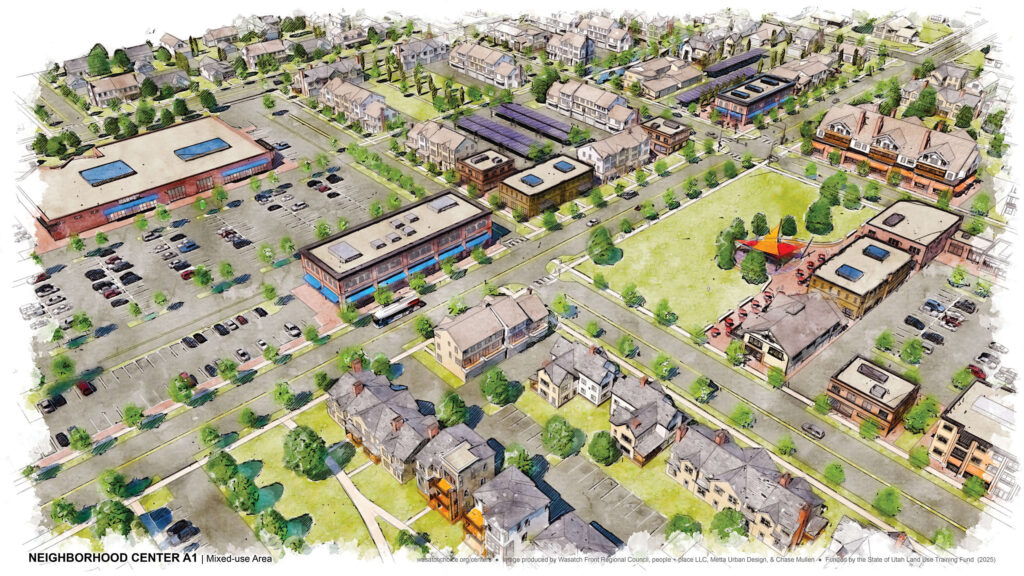
Mixed-use Area
Additional housing options in neighborhood centers can help support neighborhood retail, restaurants, and services while nearby single-family residences can enjoy walkable access. These options can also provide homes for the workforce, seniors on fixed incomes, or those just starting out, right in the community where they work, have grown up, or have spent their lives.
Local Shopping and Services
Buildings feature neighborhood-scale
shops with housing above.
Restaurants and seating adjacent to
the community green support
community gathering.
Gathering Space
A small multi-use park for all ages
includes play space for families and
children.
Vertical Mixed-use
Buildings with ground floor
commercial or live/work space can
accommodate apartments, condos, or
office uses on upper floors.
Middle Housing Options
A variety of small-scale, multi-unit
housing types—such as duplexes,
triplexes, and cottages—fit seamlessly
into residential neighborhoods.
Screened Shared Parking
Shared parking includes on-street
parking and surface parking tucked
behind buildings. Parking is adequate
but not prominent, keeping the
streets walkable and pleasant.
Walkable
Adjacent townhomes, apartments,
and condos help support the
neighborhood center while nearby
single-family residences enjoy
walkable access to it.
Transit Demand
Added housing and businesses
increase demand for local bus service
as an additional transportation
choice.
Local Retail Anchor
Neighborhood retail businesses—like
a market, café, or pharmacy—serve
daily needs of the surrounding
residential areas.
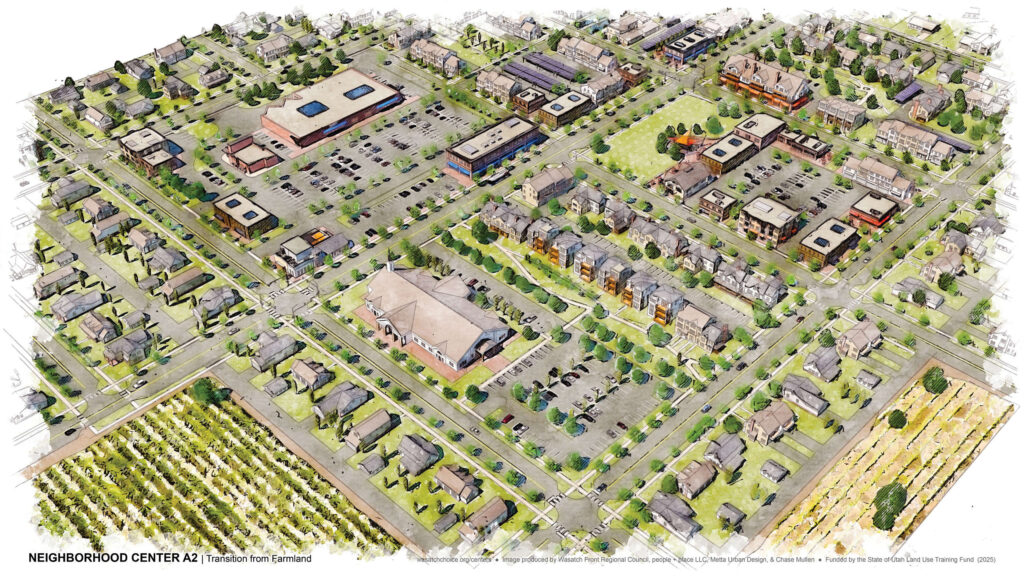
Transition from Farmland
As cities grow, farmland and open space at the rural-urban edge face increasing pressure for development. Focusing density in compact, walkable centers makes better use of infrastructure, supports local shops and services, and helps keep surrounding land in agriculture or open space. This approach manages growth while maintaining the area’s rural character.
Local Shopping and Services
Buildings feature neighborhood-scale
shops with housing above.
Restaurants and seating adjacent to
the community green support
community gathering.
Gathering Space
A small multi-use park for all ages
includes play space for families and
children.
Vertical Mixed-use
Buildings with ground floor
commercial or live/work space can
accommodate apartments, condos, or
office uses on upper floors.
Middle Housing Options
A variety of small-scale, multi-unit
housing types—such as duplexes,
triplexes, and cottages—fit seamlessly
into residential neighborhoods.
Screened Shared Parking
Shared parking includes on-street
parking and surface parking tucked
behind buildings. Parking is adequate
but not prominent, keeping the
streets walkable and pleasant.
Walkable
Adjacent townhomes, apartments,
and condos help support the
neighborhood center while nearby
single-family residences enjoy
walkable access to it.
Transit Demand
Added housing and businesses
increase demand for local bus service
as an additional transportation
choice.
Local Retail Anchor
Neighborhood retail businesses—like
a market, café, or pharmacy—serve
daily needs of the surrounding
residential areas.
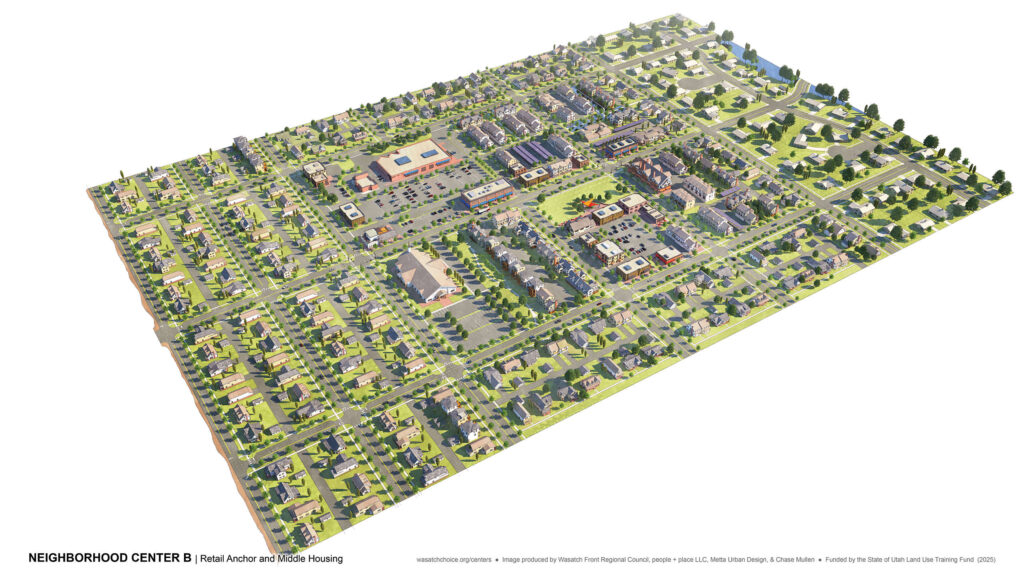
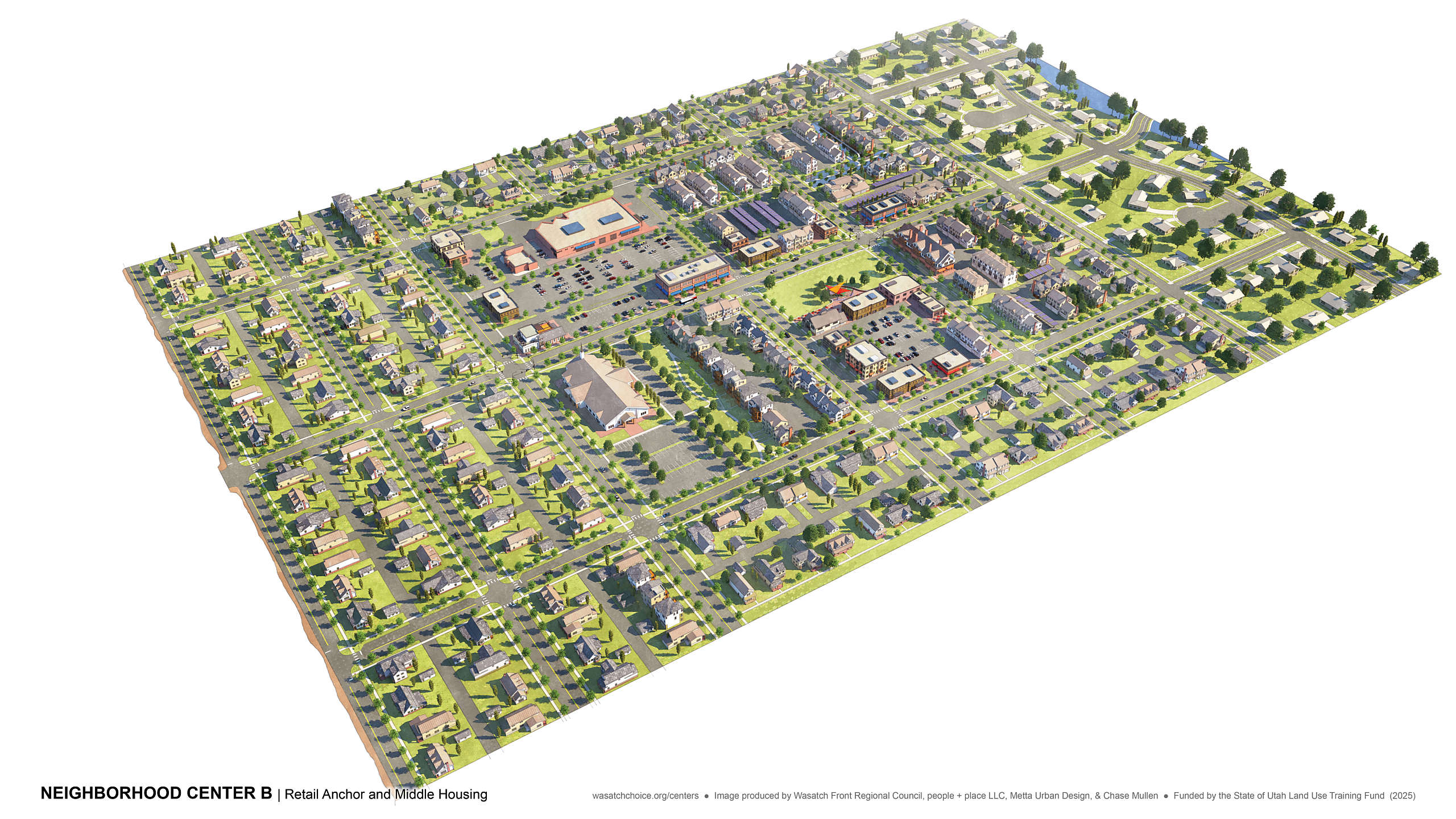
Neighborhood Center B
Retail Anchor and Middle Housing
Imagine creating a neighborhood center in your community—a gathering space to connect with one another, maybe grab lunch, let the kids play. Maybe you can even imagine living here, in an apartment above one of the shops or in a nearby townhome. While this series illustrates a new center in a growing area on the edge of a community, a neighborhood center could also emerge over time in an existing part of town.
1-3
Floors
8-24
DUs / AC
10-12
Jobs / AC
Block Pattern
Surface Parking
Local Bus Service
Existing Conditions
Growing communities often have land on the edge of town just beyond existing residential subdivisions that are under increasing growth pressure to annex and develop. Frequently, this land is developed into new suburban housing.
Future Scenario
A neighborhood center can focus on providing more housing choices in addition to neighborhood gathering space, shops, and services. Here’s a mix of small lot single family, townhomes, and small-scale apartments and condos. Parking is largely behind buildings, to keep streets attractive and comfortable.


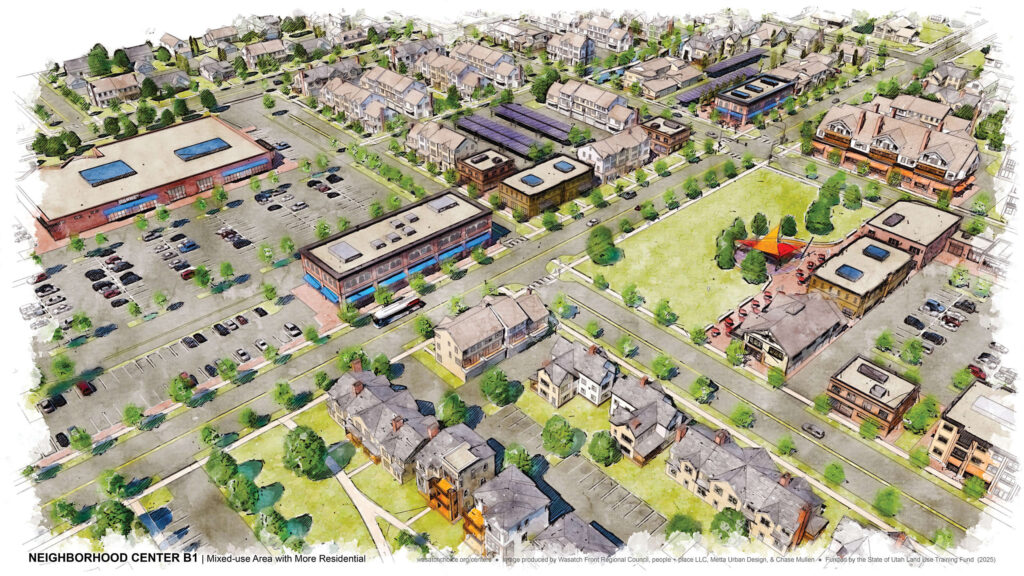
Mixed-use Area with More Residential
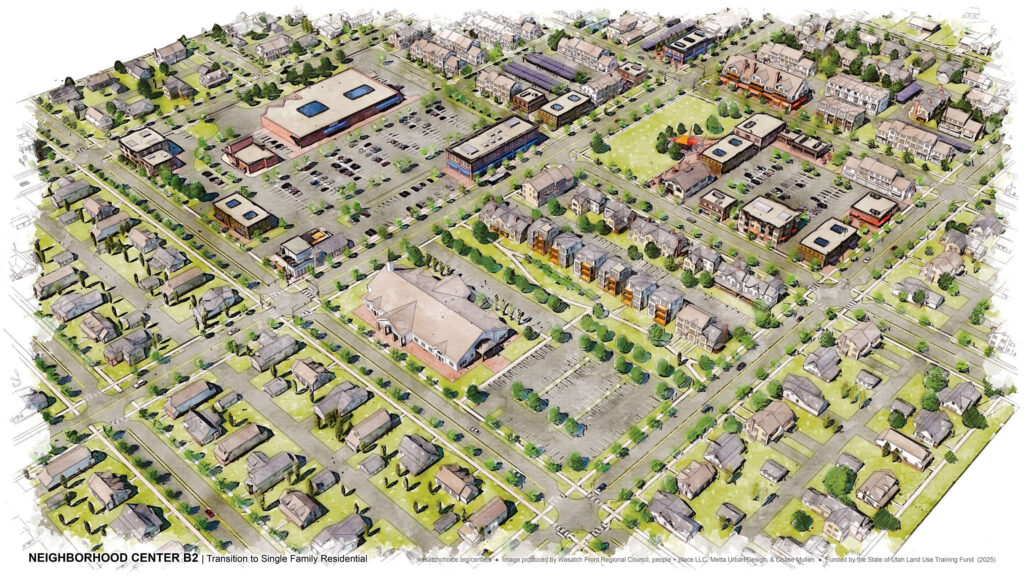
Transition to Single Family Residential
Mixed-use Area with More Residential
Additional housing options in neighborhood centers can help support neighborhood retail, restaurants, and services while nearby single-family residences can enjoy walkable access. These options can also provide homes for the workforce, seniors on fixed incomes, or those just starting out, right in the community where they work, have grown up, or have spent their lives.
Local Shopping and Services
Buildings feature neighborhood-scale
shops with housing above.
Restaurants and seating adjacent to
the community green support
community gathering.
Gathering Space
A small multi-use park for all ages
includes play space for families and
children.
Vertical Mixed-use
Buildings with ground floor
commercial or live/work space can
accommodate apartments, condos, or
office uses on upper floors.
Middle Housing Options
A variety of small-scale, multi-unit
housing types—such as duplexes,
triplexes, and cottages—fit seamlessly
into residential neighborhoods.
Screened Shared Parking
Shared parking includes on-street
parking and surface parking tucked
behind buildings. Parking is adequate
but not prominent, keeping the
streets walkable and pleasant.
Walkable
Adjacent townhomes, apartments,
and condos help support the
neighborhood center while nearby
single-family residences enjoy
walkable access to it.
Transit Demand
Added housing and businesses
increase demand for local bus service
as an additional transportation
choice.
Local Retail Anchor
Neighborhood retail businesses—like
a market, café, or pharmacy—serve
daily needs of the surrounding
residential areas.
Transition to Single Family Residential
Lorem ipsum dolor sit amet, consectetur adipiscing elit, sed do eiusmod tempor incididunt ut labore et dolore magna aliqua. Ut enim ad minim veniam, quis nostrud exercitation ullamco laboris nisi ut aliquip ex ea commodo consequat. Duis aute irure dolor in reprehenderit in voluptate velit esse cillum dolore eu fugiat nulla pariatur. Excepteur sint occaecat cupidatat non proident, sunt in culpa qui officia deserunt mollit anim id est laborum.
Local Shopping and Services
Buildings feature neighborhood-scale
shops with housing above.
Restaurants and seating adjacent to
the community green support
community gathering.
Gathering Space
A small multi-use park for all ages
includes play space for families and
children.
Vertical Mixed-use
Buildings with ground floor
commercial or live/work space can
accommodate apartments, condos, or
office uses on upper floors.
Middle Housing Options
A variety of small-scale, multi-unit
housing types—such as duplexes,
triplexes, and cottages—fit seamlessly
into residential neighborhoods.
Screened Shared Parking
Shared parking includes on-street
parking and surface parking tucked
behind buildings. Parking is adequate
but not prominent, keeping the
streets walkable and pleasant.
Walkable
Adjacent townhomes, apartments,
and condos help support the
neighborhood center while nearby
single-family residences enjoy
walkable access to it.
Transit Demand
Added housing and businesses
increase demand for local bus service
as an additional transportation
choice.
Local Retail Anchor
Neighborhood retail businesses—like
a market, café, or pharmacy—serve
daily needs of the surrounding
residential areas.
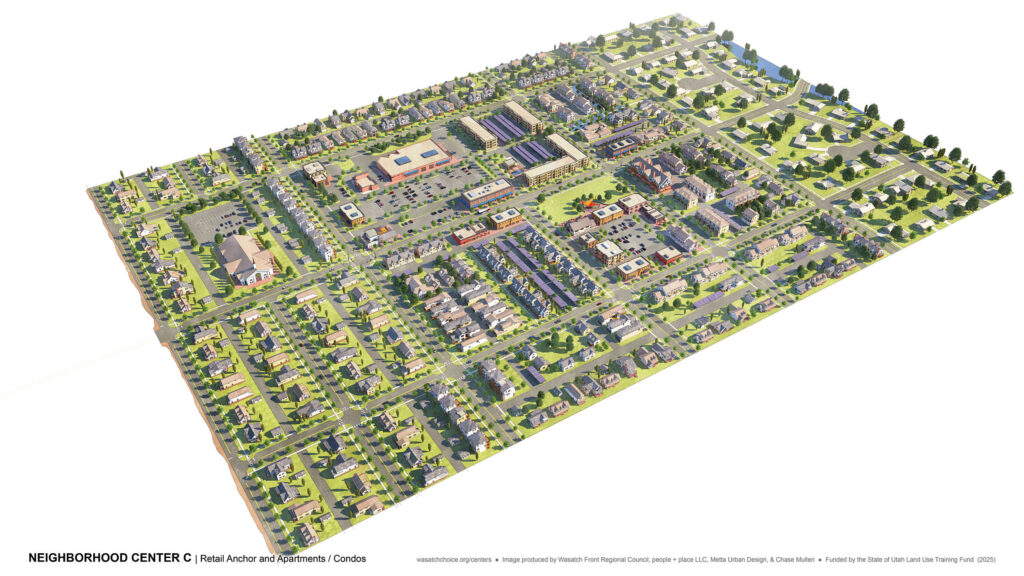
Neighborhood Center C
Retail Anchor and Apartments / Condos
Imagine creating a neighborhood center in your community—a gathering space to connect with one another, maybe grab lunch, let the kids play. Maybe you can even imagine living here, in an apartment above one of the shops or in a nearby townhome. While this series illustrates a new center in a growing area on the edge of a community, a neighborhood center could also emerge over time in an existing part of town.
1-3
Floors
8-24
DUs / AC
10-12
Jobs / AC
Block Pattern
Surface Parking
Local Bus Service
Existing Conditions
Growing communities often have land on the edge of town just beyond existing residential subdivisions that are under increasing growth pressure to annex and develop. Frequently, this land is developed into new suburban housing.
Future Scenario
A neighborhood center can focus on providing more housing choices in addition to neighborhood gathering spaces, shops, and services. Here’s a mix of small lot single family homes and townhomes, with additional apartments and condos located near a larger retail area. Parking is largely behind buildings, to keep streets attractive and comfortable.


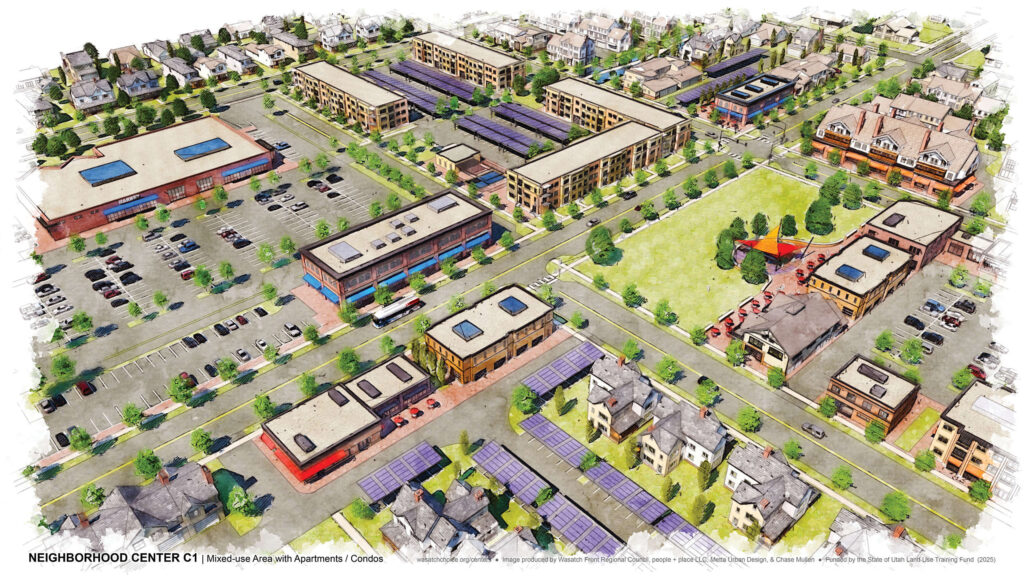
Mixed-use Area with Apartments / Condos
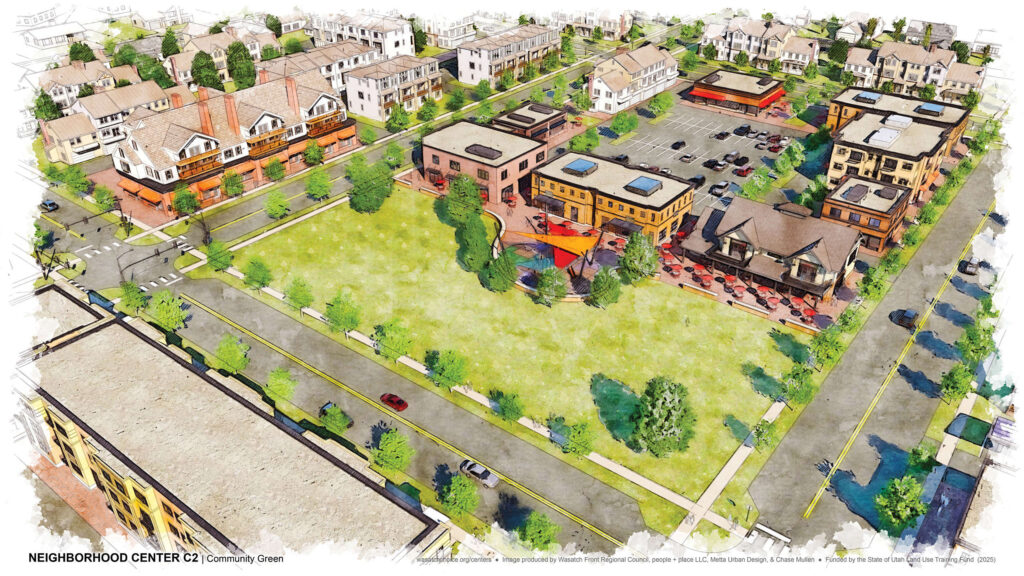
Community Green
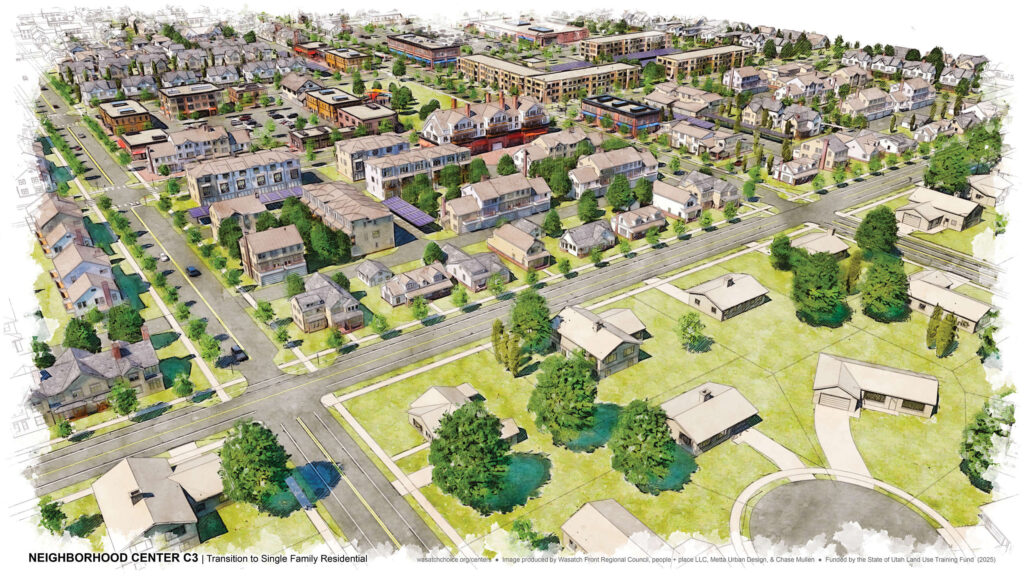
Transition to Single Family Residential
Close up: Mixed-use Gathering Area
Mixed-use Area with Apartments / Condos
Additional housing options in neighborhood centers can help support neighborhood retail, restaurants, and services while nearby single-family residences can enjoy walkable access. These options can also provide homes for the workforce, seniors on fixed incomes, or those just starting out, right in the community where they work, have grown up, or have spent their lives.
Local Shopping and Services
Buildings feature neighborhood-scale
shops with housing above.
Restaurants and seating adjacent to
the community green support
community gathering.
Gathering Space
A small multi-use park for all ages
includes play space for families and
children.
Vertical Mixed-use
Buildings with ground floor
commercial or live/work space can
accommodate apartments, condos, or
office uses on upper floors.
Middle Housing Options
A variety of small-scale, multi-unit
housing types—such as duplexes,
triplexes, and cottages—fit seamlessly
into residential neighborhoods.
Screened Shared Parking
Shared parking includes on-street
parking and surface parking tucked
behind buildings. Parking is adequate
but not prominent, keeping the
streets walkable and pleasant.
Retail Anchor
Neighborhood retail businesses—like
a market, café, or pharmacy—serve
daily needs of the surrounding
residential areas.
Transit Demand
Added housing and businesses
increase demand for local bus service
as an additional transportation
choice.
More Housing Variety
Three story apartments or condos
with rear screened parking and on-
site amenities add to the housing mix.
Community Green
The heart of this neighborhood center includes a community green, with walkable shopping and dining.
Local Shopping and Services
Buildings feature neighborhood-scale
shops with housing above.
Restaurants and seating adjacent to
the community green support
community gathering.
Gathering Space
A small multi-use park for all ages
includes play space for families and
children.
Vertical Mixed-use
Buildings with ground floor
commercial or live/work space can
accommodate apartments, condos, or
office uses on upper floors.
Middle Housing Options
A variety of small-scale, multi-unit
housing types—such as duplexes,
triplexes, and cottages—fit seamlessly
into residential neighborhoods.
Screened Shared Parking
Shared parking includes on-street
parking and surface parking tucked
behind buildings. Parking is adequate
but not prominent, keeping the
streets walkable and pleasant.
More Housing Variety
Three story apartments or condos
with rear screened parking and on-
site amenities add to the housing mix.
Walkable
Adjacent townhomes, apartments,
and condos help support the
neighborhood center while nearby
single-family residences enjoy
walkable access to it.
Transition to Single Family Residential
Small lot single family homes, townhomes, and mansion homes provide a comfortable transition between an existing single-family neighborhood and the gathering space, retail/commercial uses, and apartments and condos in the heart of the neighborhood center.
Vertical Mixed-use
Buildings with ground floor
commercial or live/work space can
accommodate apartments, condos, or
office uses on upper floors.
Housing Choices
A range of housing options, including
small multiplex designs accommodate
different income levels, help residents
live and thrive within the community
without upending its character.
Existing Neighborhood
A stable, low-density area
characterized by detached homes,
mature landscaping, and a quiet,
family-oriented atmosphere.
Transit Demand
Added housing and businesses
increase demand for local bus service
as an additional transportation
choice.
Walkable
Adjacent townhomes, apartments,
and condos help support the
neighborhood center while nearby
single-family residences enjoy
walkable access to it.
Residential Scale Transition
Existing single-family neighborhoods
transition gradually to a mix of one
and two story small lot homes,
followed by townhomes and mansion-
style multiplexes.
Close up: Mixed-use Gathering Area
Gathering spaces to connect with one another, maybe grab lunch, and maybe let the kids play.
Local Shopping and Services
Buildings feature neighborhood-scale
shops with housing above.
Restaurants and seating adjacent to
the community green support
community gathering.
Gathering Space
A small multi-use park for all ages
includes play space for families and
children.
Vertical Mixed-use
Buildings with ground floor
commercial or live/work space can
accommodate apartments, condos, or
office uses on upper floors.
Walkable
Adjacent townhomes, apartments,
and condos help support the
neighborhood center while nearby
single-family residences enjoy
walkable access to it.
Neighborhood Center D
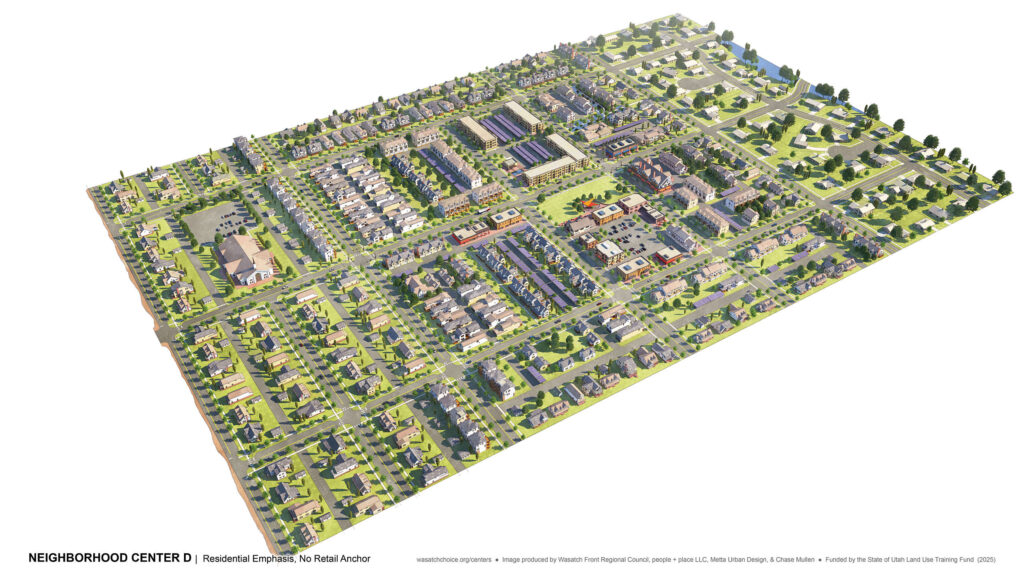
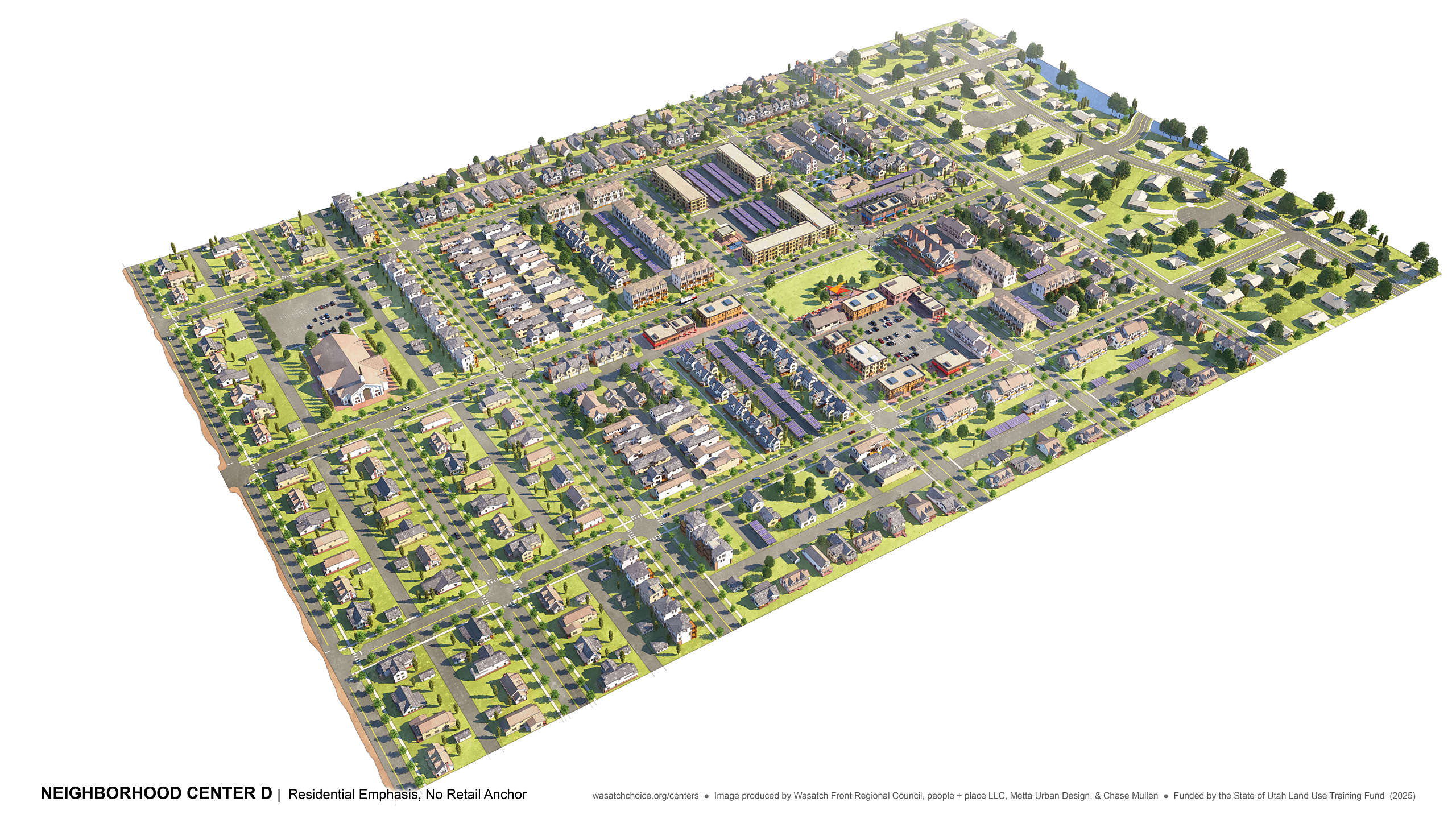
Residential Emphasis, No Anchor
Imagine creating a neighborhood center in your community—a gathering space to connect with one another, maybe grab lunch, let the kids play. Maybe you can even imagine living here, in an apartment above one of the shops or in a nearby townhome. While this series illustrates a new center in a growing area on the edge of a community, a neighborhood center could also emerge over time in an existing part of town.
1-3
Floors
8-24
DUs / AC
8-10
Jobs / AC
Block Pattern
Surface Parking
Local Bus Service
Existing Conditions
Growing communities often have land on the edge of town just beyond existing residential subdivisions that are under increasing growth pressure to annex and develop. Frequently, this land is developed into new suburban housing.
Future Scenario
A neighborhood center can focus on providing more housing choices in addition to neighborhood gathering spaces, shops, and services. This scenario provides smaller-scale commercial services mixed with housing. The larger retail area shown in scenarios A, B, and C is replaced with small lot single family homes, townhomes, and live/work housing. Parking is largely behind buildings, to keep streets attractive and comfortable.


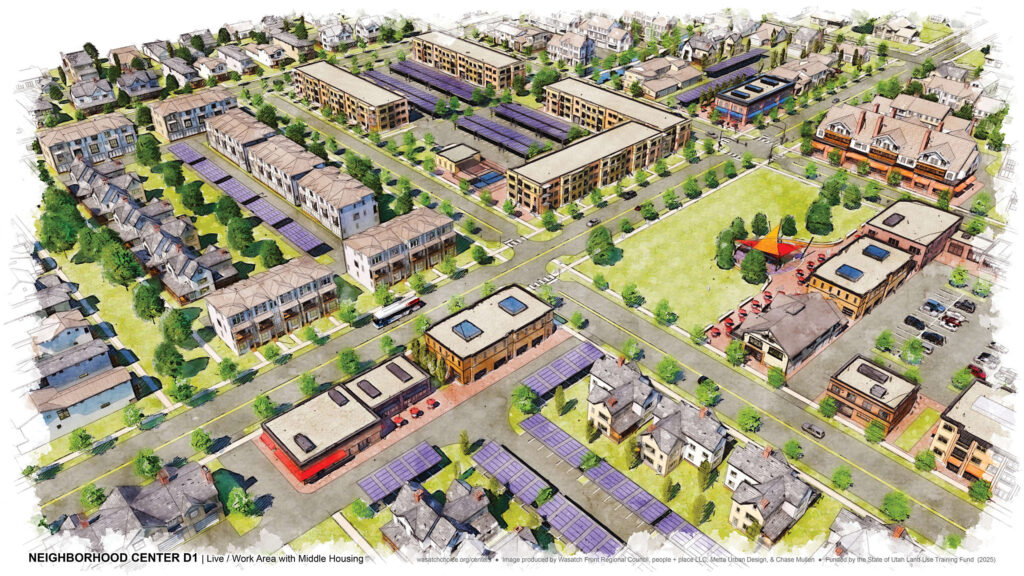
Live / Work Area with Middle Housing
Live-work housing and middle housing options in neighborhood centers can create vibrant, mixed-use communities where people live and work in the same place. Townhomes, small apartments, and live-work units bring daily activity that supports local shops, restaurants, and services. These options provide convenient housing for small business owners, remote workers, and the local workforce, as well as seniors and young families who want to stay in the community where they have roots.

Local Shopping and Services
Buildings feature neighborhood-scale
shops with housing above.
Restaurants and seating adjacent to
the community green support
community gathering.
Gathering Space
A small multi-use park for all ages
includes play space for families and
children.
Vertical Mixed-use
Buildings with ground floor
commercial or live/work space can
accommodate apartments, condos, or
office uses on upper floors.
Middle Housing Options
A variety of small-scale, multi-unit
housing types—such as duplexes,
triplexes, and cottages—fit seamlessly
into residential neighborhoods.
Screened Shared Parking
Shared parking includes on-street
parking and surface parking tucked
behind buildings. Parking is adequate
but not prominent, keeping the
streets walkable and pleasant.
Transit Demand
Added housing and businesses
increase demand for local bus service
as an additional transportation
choice.
More Housing Variety
Three story apartments or condos
with rear screened parking and on-
site amenities add to the housing mix.
Walkable
Adjacent townhomes, apartments,
and condos help support the
neighborhood center while nearby
single-family residences enjoy
walkable access to it.
Download Resources
Interested in using visualizing centers resources in your community? Download the desired package from the links below.