Mixed-use Corridor
Mixed-use Corridor
Mixed-use Corridor

Mixed-use Corridor A

Central Crossroads

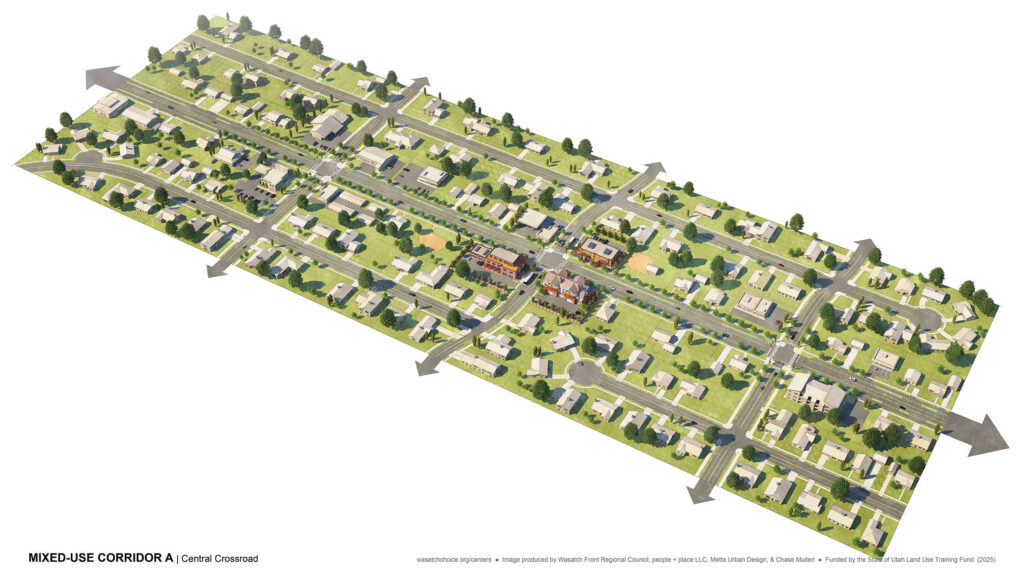
Imagine how a high-traffic roadway designed primarily for vehicle flow could transform. While still managing traffic, it transforms into a pedestrian-friendly area with the sense of place needed to support vibrant community life and connection to surrounding neighborhoods.

2-3

Floors

10-30

DUs / AC

10-12

Jobs / AC

Block Pattern

Surface Parking

Local Bus Service

Existing Conditions

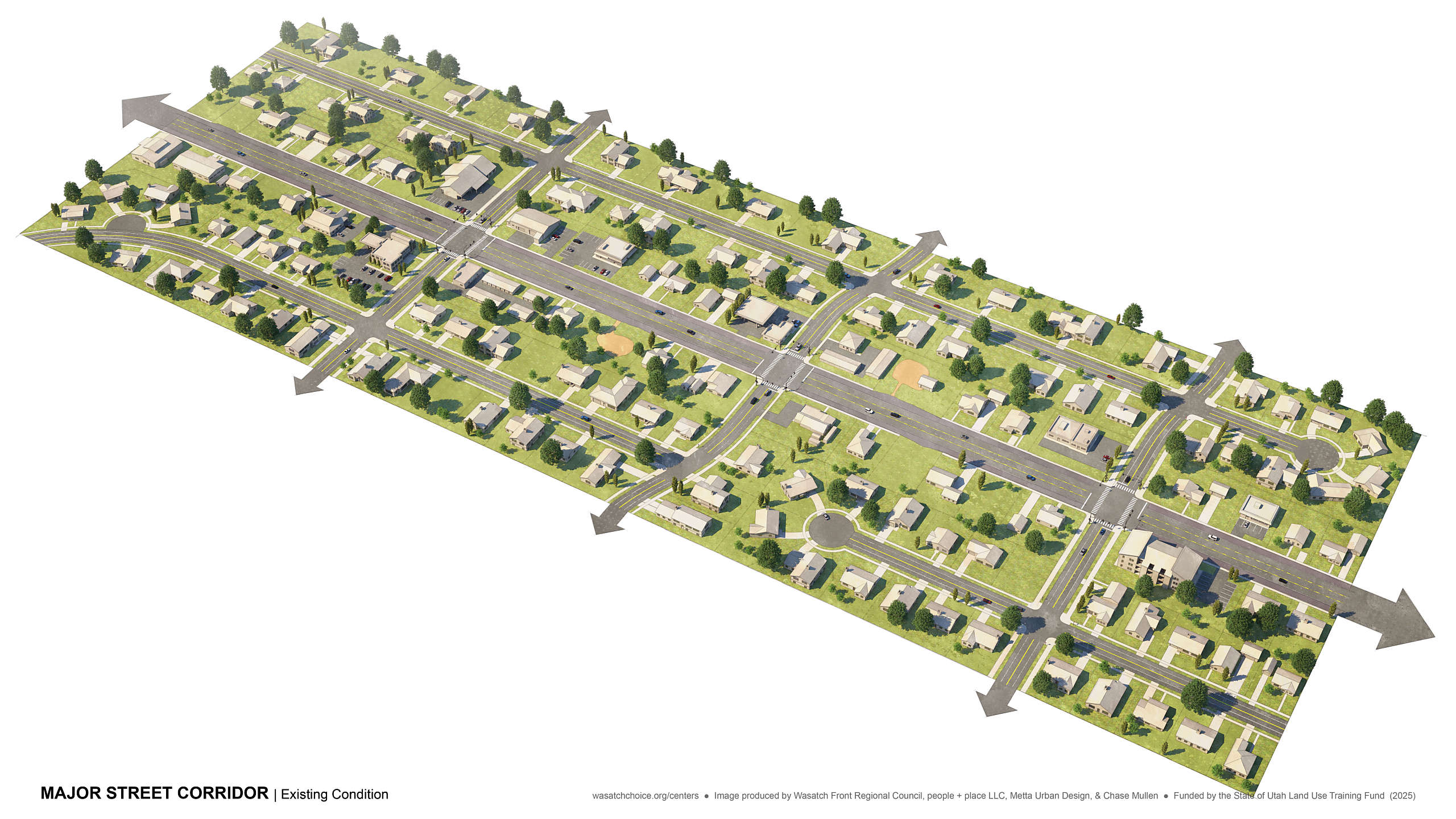
Historically, a quieter street with a mix of homes and businesses, this corridor now moves lots of traffic with more travel lanes and faster speeds, disconnected from the people and places nearby. Adjacent is a patchwork of outdated commercial buildings, aging residential, vacant lots, land uses that don’t align with the function of the corridor.

Future Scenario

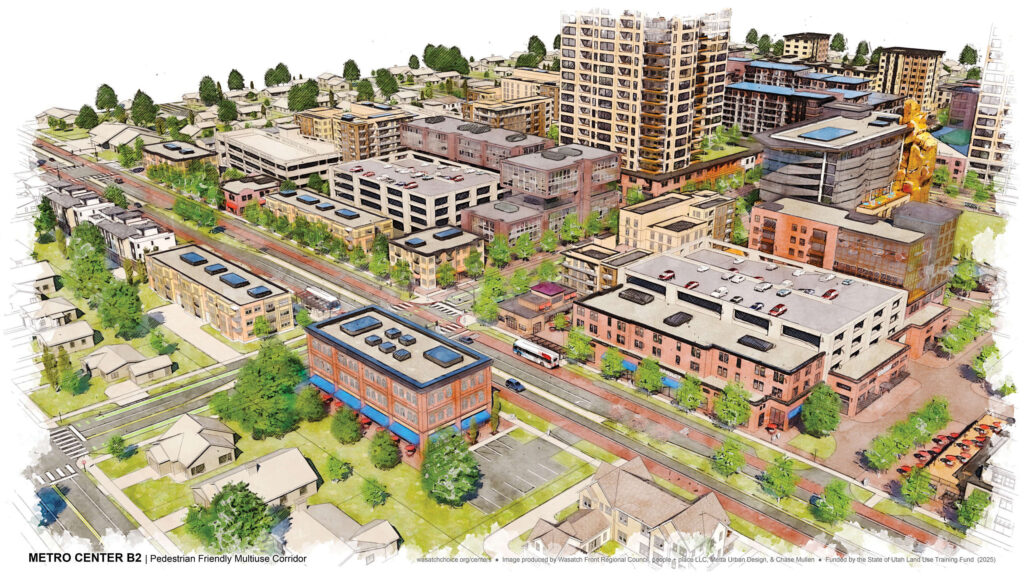
Addressing the gap between land use and transportation function doesn’t require starting over. Focused, incremental changes—like introducing small neighborhood center, adding parkstrips with street trees and sidewalks, and supporting reinvestment in aging properties—makes the street more comfortable and attractive for further reinvestment. With the right approach, these streets can evolve into more balanced, livable places that better serve their communities.

Before imageAfter image

Close Up 1: Central Crossroad

Close Up 2: Central Crossroad

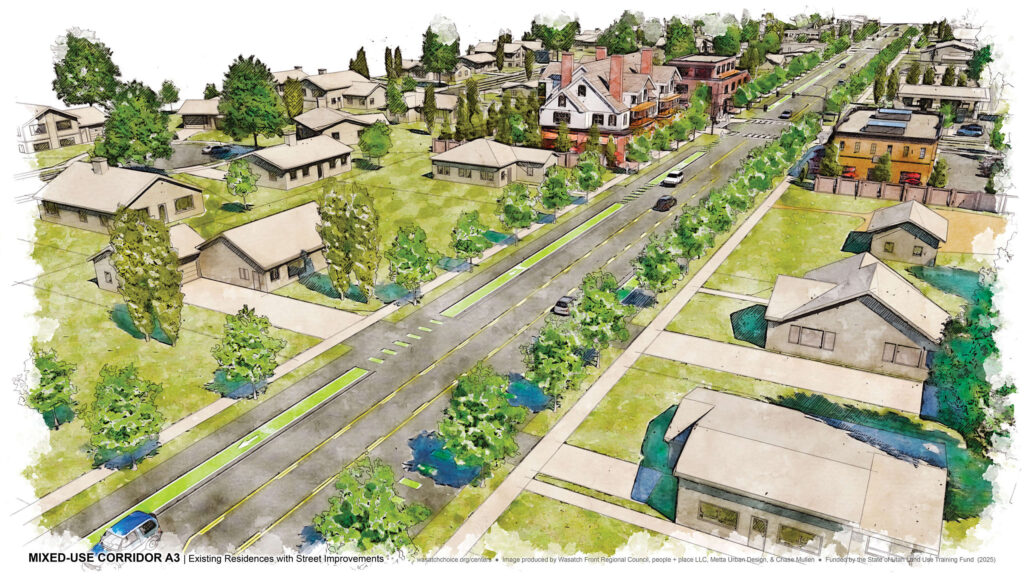
Existing Residences with Street Improvements

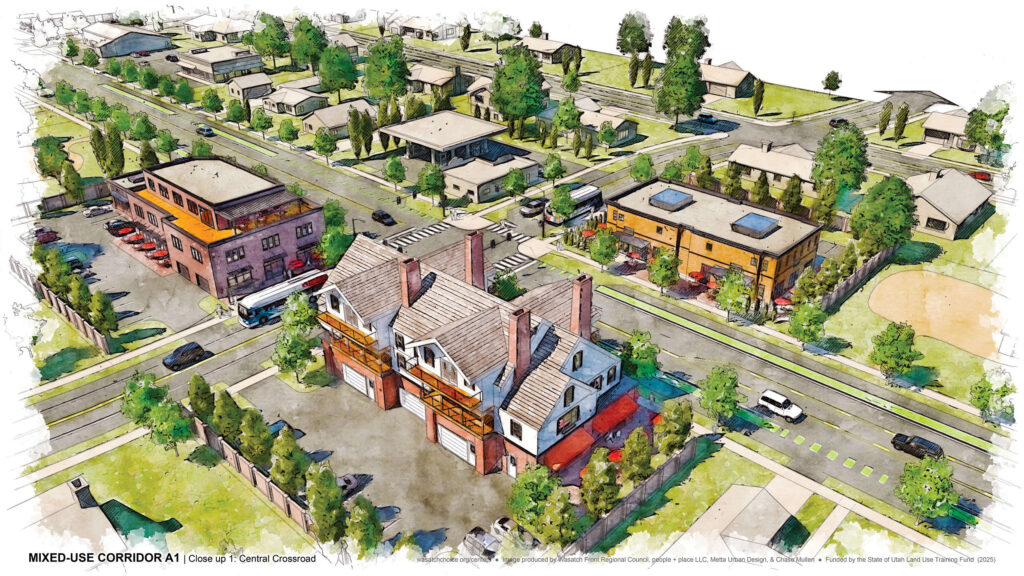
Close Up 1: Central Crossroad

A neighborhood center, sidewalks, street trees, and bike lanes begin to shift the character of the corridor, providing needed amenities, services, and housing while making the street feel more comfortable for those who are walking or biking.

Small-scale Mixed-use
A small mixed-use development
focused around a key intersection
creates a local hub, offering housing
above services and spaces that
enhance the neighborhood’s vitality.

Vertical Mixed-use
Buildings with ground floor
commercial or live/work space can
accommodate apartments, condos, or
office uses on upper floors.

Local Focus
A central spot like a small plaza,
pocket park, or street-side dining area
invites people to gather and connect.

Screened Shared Parking
Shared parking includes on-street
parking and surface parking tucked
behind buildings. Parking is screened
from nearby residences with fencing
and landscaping.

Pedestrian Infrastructure
Improvements

Targeted upgrades—like new
sidewalks, curb extensions, and
shorter crossings—make walking
safer, easier, and more appealing.

Live-work Uses
Flexible building design combines
living space with optional ground
floor small business or studio spaces,
supporting entrepreneurship and
vibrant street life.

Transit Demand
Added housing and businesses
increase demand for local bus service
as an additional transportation
choice.

Bicycle Infrastructure
Improvements

Bike lanes, trails, and crossings make
cycling safer, more comfortable, and
better connected to key destinations.

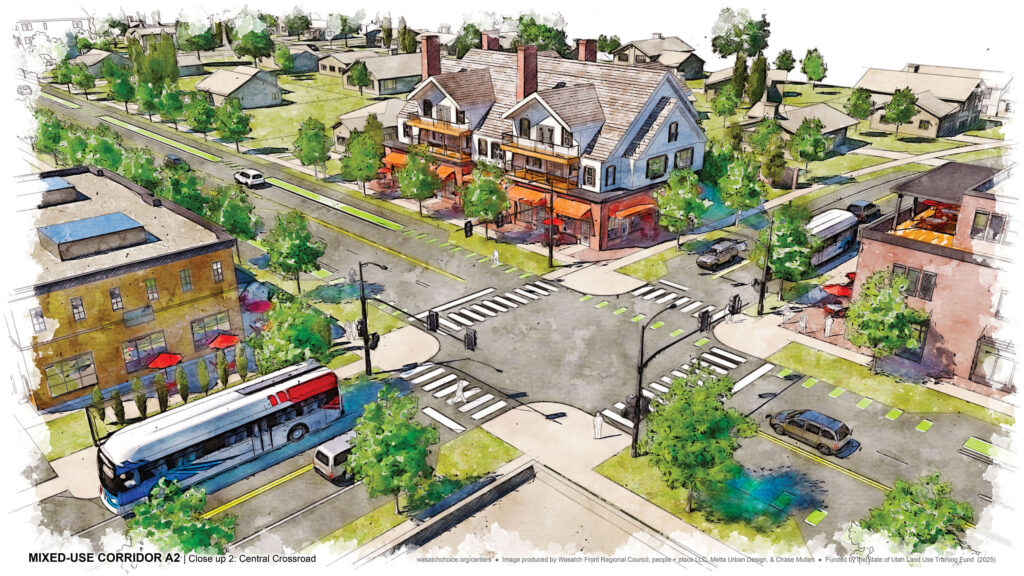
Close Up 2: Central Crossroad

A high-traffic roadway can evolve into a more livable, community-focused corridor. Incremental changes—like adding a small neighborhood center, sidewalks, street trees, bike lanes, and reinvestment in aging properties—provide needed housing, services, and amenities. These improvements create a pedestrian-friendly, connected place while still managing traffic effectively.

Small-scale Mixed-use
A small mixed-use development
focused around a key intersection
creates a local hub, offering housing
above services and spaces that
enhance the neighborhood’s vitality.

Vertical Mixed-use
Buildings with ground floor
commercial or live/work space can
accommodate apartments, condos, or
office uses on upper floors.

Local Focus
A central spot like a small plaza,
pocket park, or street-side dining area
invites people to gather and connect.

Pedestrian Infrastructure
Improvements

Targeted upgrades—like new
sidewalks, curb extensions, and
shorter crossings—make walking
safer, easier, and more appealing.

Live-work Uses
Flexible building design combines
living space with optional ground
floor small business or studio spaces,
supporting entrepreneurship and
vibrant street life.

Transit Demand
Added housing and businesses
increase demand for local bus service
as an additional transportation
choice.

Bicycle Infrastructure
Improvements

Bike lanes, trails, and crossings make
cycling safer, more comfortable, and
better connected to key destinations.

Complete Streets
Tree-lined streets provide shade and
are designed to support walking,
biking, riding transit, and driving for
safer, more inclusive public spaces.

Existing Residences with Street Improvements

Down the street from the neighborhood center, roadway improvements encourage walking and biking while moving traffic and providing on-street parking.

Small-scale Mixed-use
A small mixed-use development
focused around a key intersection
creates a local hub, offering housing
above services and spaces that
enhance the neighborhood’s vitality.

Vertical Mixed-use
Buildings with ground floor
commercial or live/work space can
accommodate apartments, condos, or
office uses on upper floors.

Pedestrian Infrastructure
Improvements

Targeted upgrades—like new
sidewalks, curb extensions, and
shorter crossings—make walking
safer, easier, and more appealing.

Screened Shared Parking
Shared parking includes on-street
parking and surface parking tucked
behind buildings. Parking is screened
from nearby residences with fencing
and landscaping.

Bicycle Infrastructure
Improvements

Bike lanes, trails, and crossings make
cycling safer, more comfortable, and
better connected to key destinations.

Complete Streets
Tree-lined streets provide shade and
are designed to support walking,
biking, riding transit, and driving for
safer, more inclusive public spaces.

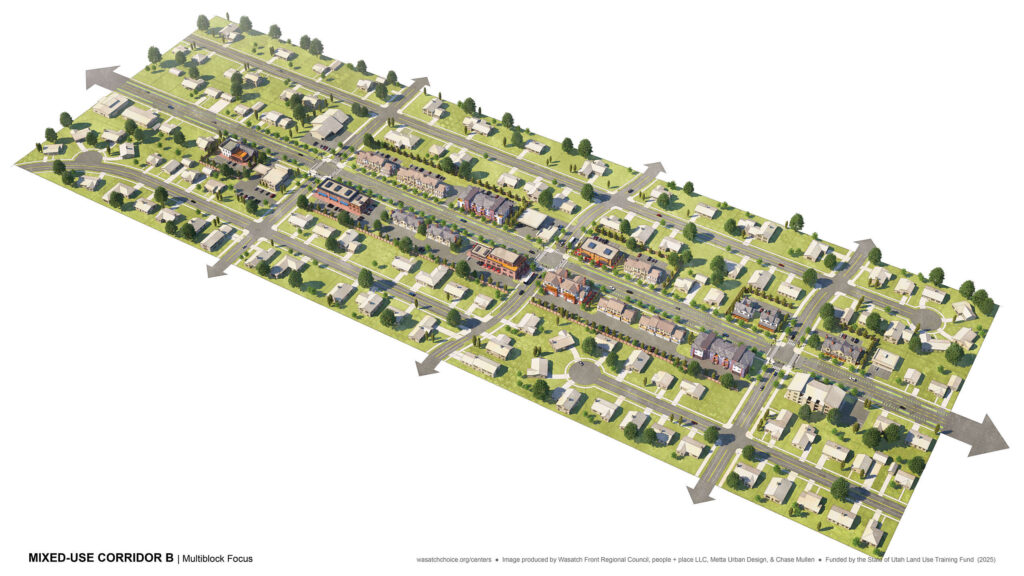
Mixed-use Corridor B

Multiblock Focus

Imagine how a high-traffic roadway designed primarily for vehicle flow could transform. While still managing traffic, it transforms into a pedestrian-friendly area with the sense of place needed to support vibrant community life and connection to surrounding neighborhoods.

2-3

Floors

10-30

DUs / AC

10-12

Jobs / AC

Block Pattern

Surface Parking

Enhanced Bus Service

Existing Conditions

Historically, a quieter street with a mix of homes and businesses, this corridor now moves lots of traffic with more travel lanes and faster speeds, disconnected from the people and places nearby. Adjacent is a patchwork of outdated commercial buildings, aging residential, vacant lots, land uses that don’t align with the function of the corridor.

Future Scenario

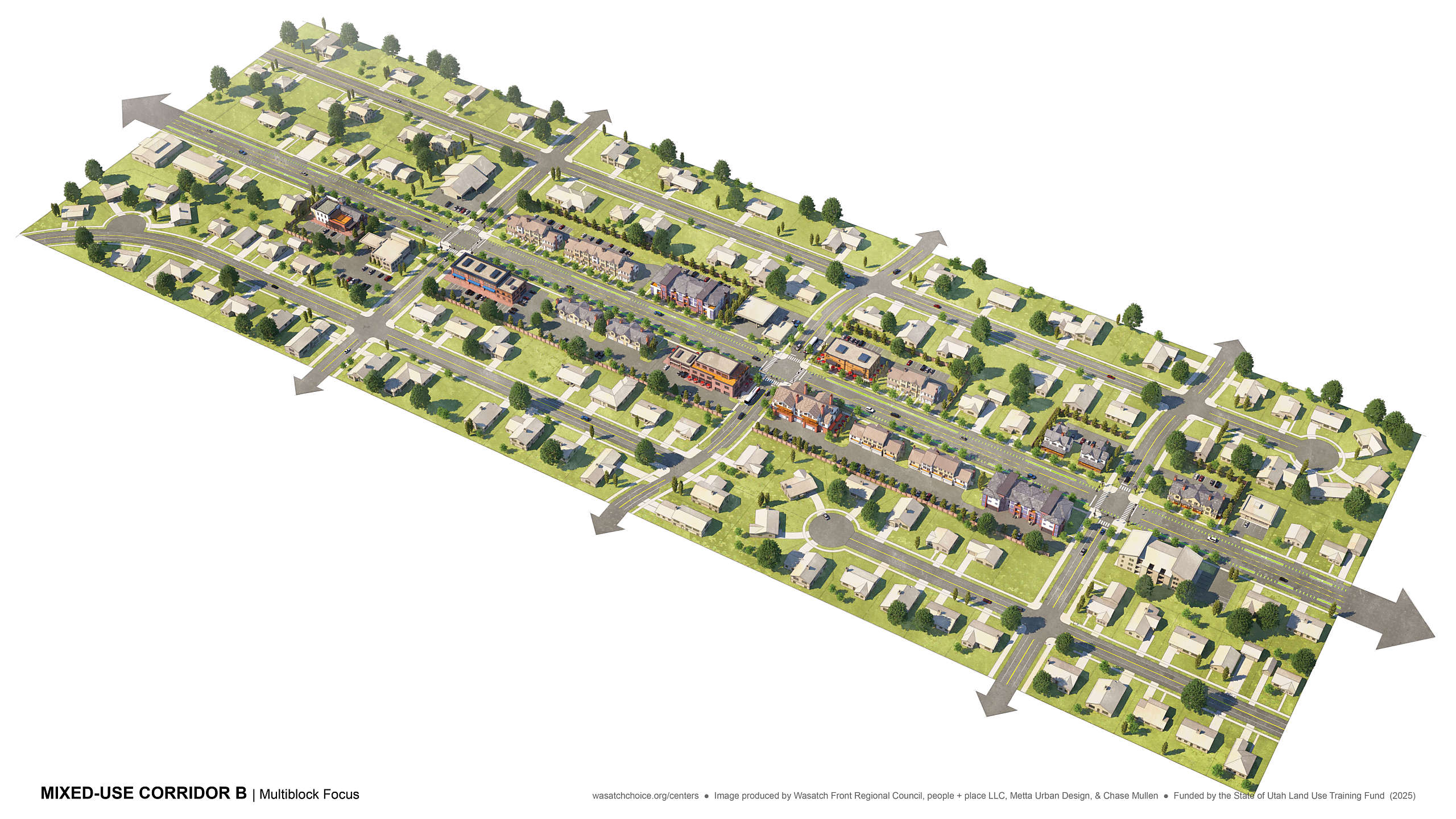
Over time, a larger section of the corridor can be a part of an intentional approach—reimagining the space across two intersections and the blocks in between. This means introducing small-scale mixed-use buildings, updated housing options, and encouraging public spaces that act as a buffer between the busy corridor and nearby homes. With targeted improvements to both the street and surrounding properties, this transition zone can evolve into a more coherent, connected area—supporting reinvestment while respecting the scale of established neighborhoods.

Before imageAfter image

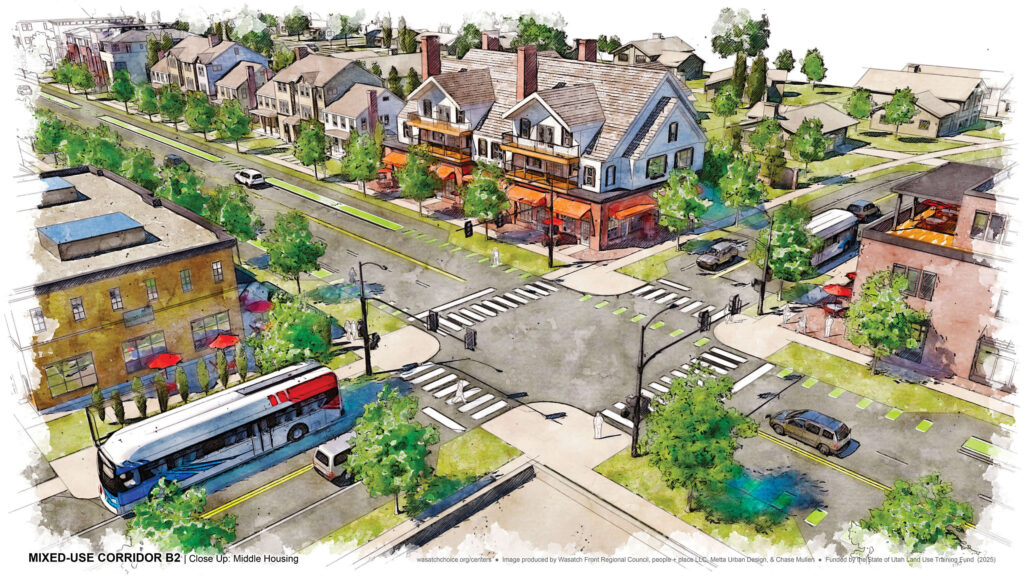
Central Intersection and Middle Housing

Close Up: Middle Housing

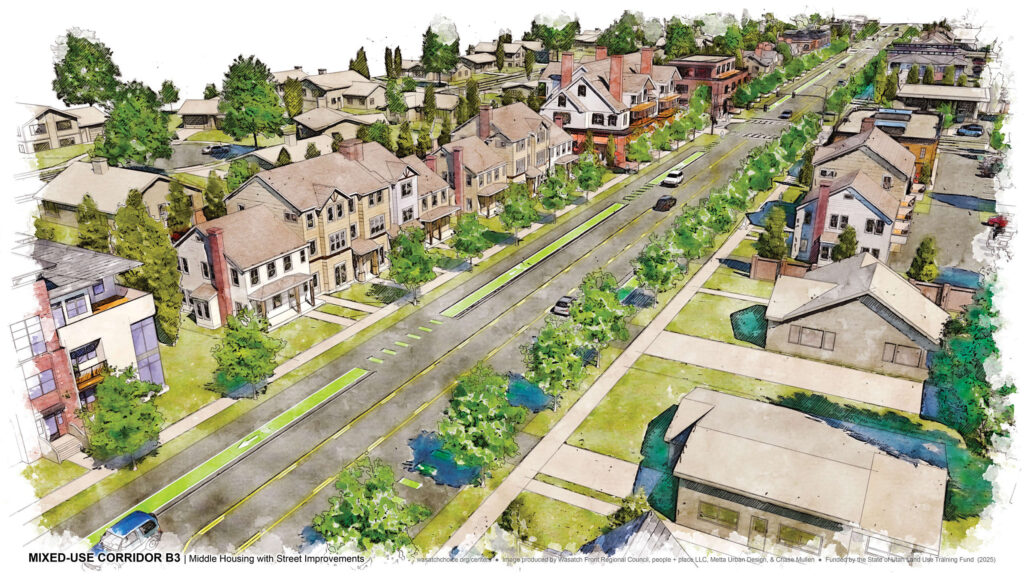
Middle Housing with Street Improvements

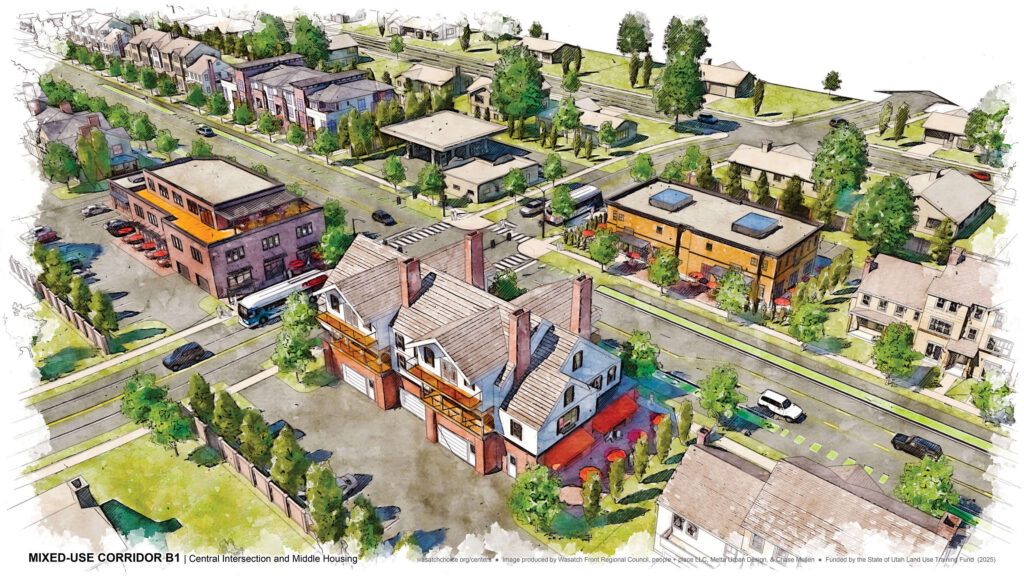
Central Intersection and Middle Housing

A neighborhood center, sidewalks, street trees, and bike lanes begin to shift the character of the corridor, providing needed amenities, services, and housing while making the street feel more comfortable for those who are walking or biking.

Vertical Mixed-use
Buildings with ground floor
commercial or live/work space can
accommodate apartments, condos, or
office uses on upper floors.

Local Focus
A central spot like a small plaza,
pocket park, or street-side dining area
invites people to gather and connect.

Screened Shared Parking
Shared parking includes on-street
parking and surface parking tucked
behind buildings. Parking is screened
from nearby residences with fencing
and landscaping.

Pedestrian Infrastructure
Improvements

Targeted upgrades—like new
sidewalks, curb extensions, and
shorter crossings—make walking
safer, easier, and more appealing.

Live-work Uses
Flexible building design combines
living space with optional ground
floor small business or studio spaces,
supporting entrepreneurship and
vibrant street life.

Transit Demand
Added housing and businesses
increase demand for local bus service
as an additional transportation
choice.

Middle Housing
Townhomes or small apartments
create a gentle transition from busy
streets to quieter residential areas,
offering both housing diversity and a
neighborhood buffer.

Complete Streets
Tree-lined streets provide shade and
are designed to support walking,
biking, riding transit, and driving for
safer, more inclusive public spaces.

Close Up: Middle Housing

Investment in a neighborhood center and pedestrian-friendly roadway improvements encourages housing reinvestment along the corridor.

Small-scale Mixed-use
A small mixed-use development
focused around a key intersection
creates a local hub, offering housing
above services and spaces that
enhance the neighborhood’s vitality.

Vertical Mixed-use
Buildings with ground floor
commercial or live/work space can
accommodate apartments, condos, or
office uses on upper floors.

Screened Shared Parking
Shared parking includes on-street
parking and surface parking tucked
behind buildings. Parking is screened
from nearby residences with fencing
and landscaping.

Pedestrian Infrastructure
Improvements

Targeted upgrades—like new
sidewalks, curb extensions, and
shorter crossings—make walking
safer, easier, and more appealing.

Live-work Uses
Flexible building design combines
living space with optional ground
floor small business or studio spaces,
supporting entrepreneurship and
vibrant street life.

Transit Demand
Added housing and businesses
increase demand for local bus service
as an additional transportation
choice.

Middle Housing
Townhomes or small apartments
create a gentle transition from busy
streets to quieter residential areas,
offering both housing diversity and a
neighborhood buffer.

Complete Streets
Tree-lined streets provide shade and
are designed to support walking,
biking, riding transit, and driving for
safer, more inclusive public spaces.

Middle Housing with Street Improvements

As roadway improvements encourage walking and biking while moving traffic and providing on-street parking, and middle housing and mixed-use redevelopment opportunities.

Small-scale Mixed-use
A small mixed-use development
focused around a key intersection
creates a local hub, offering housing
above services and spaces that
enhance the neighborhood’s vitality.

Vertical Mixed-use
Buildings with ground floor
commercial or live/work space can
accommodate apartments, condos, or
office uses on upper floors.

Pedestrian Infrastructure
Improvements
Targeted upgrades—like new
sidewalks, curb extensions, and
shorter crossings—make walking
safer, easier, and more appealing.

Screened Shared Parking
Shared parking includes on-street
parking and surface parking tucked
behind buildings. Parking is screened
from nearby residences with fencing
and landscaping.

Bicycle Infrastructure
Improvements

Bike lanes, trails, and crossings make
cycling safer, more comfortable, and
better connected to key destinations.

Middle Housing
Townhomes or small apartments
create a gentle transition from busy
streets to quieter residential areas,
offering both housing diversity and a
neighborhood buffer.

Complete Streets
Tree-lined streets provide shade and
are designed to support walking,
biking, riding transit, and driving for
safer, more inclusive public spaces.

Download Resources

Interested in using visualizing centers resources in your community? Download the desired package from the links below.